Is Quito, Ecuador Worth Visiting? Honest Guide for Travelers
Is Quito worth visiting? Before we arrived, almost everyone told us not to go. They said it was unsafe, dirty, and just another big city with nothing special to offer. Some even told us to skip it entirely and head straight to the Galápagos or Baños.
But we had to experience Quito ourselves to create any perception about it. And after spending four days exploring the south, centre, and north of Quito, we had a completely different experience.
From beautiful mountain views and colorful hillside homes to neighborhoods with distinct personalities and deep historical roots, Quito turned out to be far more layered than we expected. In fact, it’s a city we could easily see ourselves living in long-term.
We will share our honest breakdown of what surprised us, what challenged us, what we loved, and what you should realistically expect before visiting Ecuador’s capital.
First Impressions of Quito: What Surprised Us Most
We arrived in Quito after spending a month on the Ecuadorian coast. Before that, we had been traveling across Argentina, Chile, Bolivia and Peru for nine months and living in Cuenca for four months, so we were already familiar with altitude, historic cities, and Latin American urban life.
Still, Quito felt different.
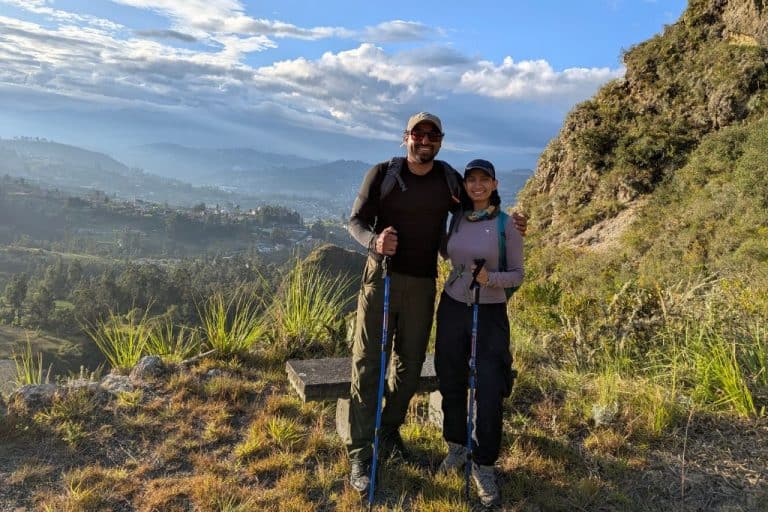
The first thing that struck us was the beauty of this city. The city stretches across a long Andean valley, surrounded by mountains on every side. Colorful homes are spread out on the hillsides and everywhere you look, there’s a view.
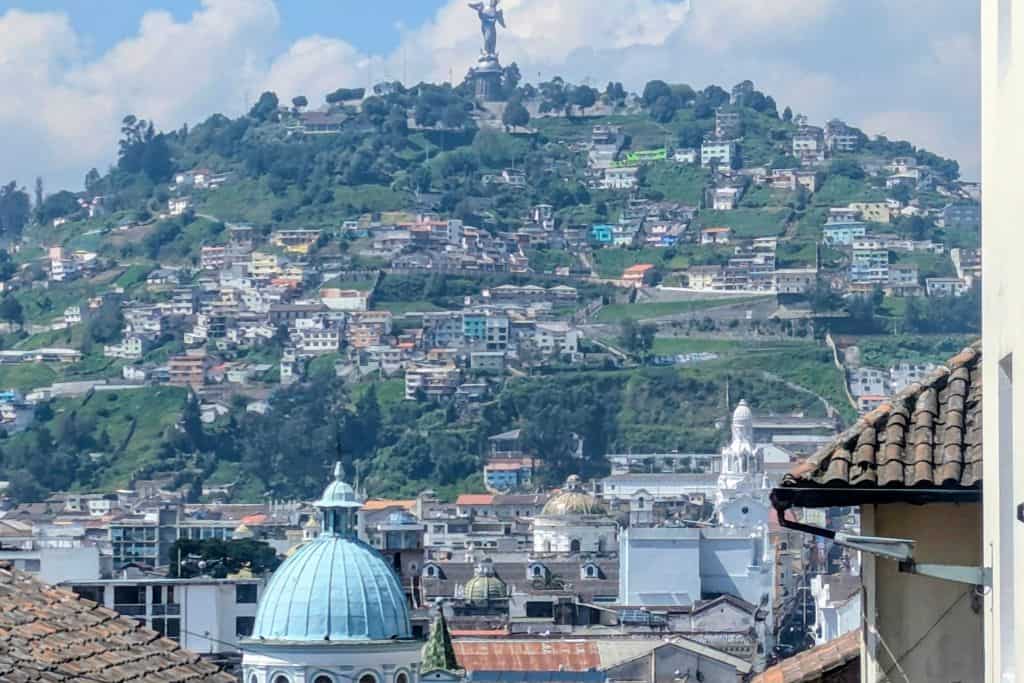
The second surprise? Quito doesn’t feel like one single city. It feels like multiple cities stitched together. Each neighborhood has its own vibe, atmosphere, and identity.
We spent time exploring the south, the historic centre, and the northern districts. Each area felt like a completely different world. That contrast alone made the city fascinating.
READ MORE: Perfect 3-Day Itinerary for Cuenca, Ecuador (2026 Guide)
OUR TRAVEL RESOURCES FOR QUITO
➤ For our accommodations, we use Booking.com or HostelWorld
➤ For renting a car, we use Discovercars as it gives us best car rental deals
➤ To book any tours, we trust Viator.com or Getyourguide.com
➤ To always have data available, we get our eSIM from Airalo
Quito Is Not One City, It’s Many Neighborhoods
One of the biggest mistakes people make is trying to define Quito with a single description. You simply can’t.
Some areas are historic and traditional. Others are modern and polished. Some are artistic and bohemian. Others are busy, commercial, or residential.
Your experience of Quito depends almost entirely on where you spend your time. So let me break it down for you.
Historic Centre (Centro Histórico)
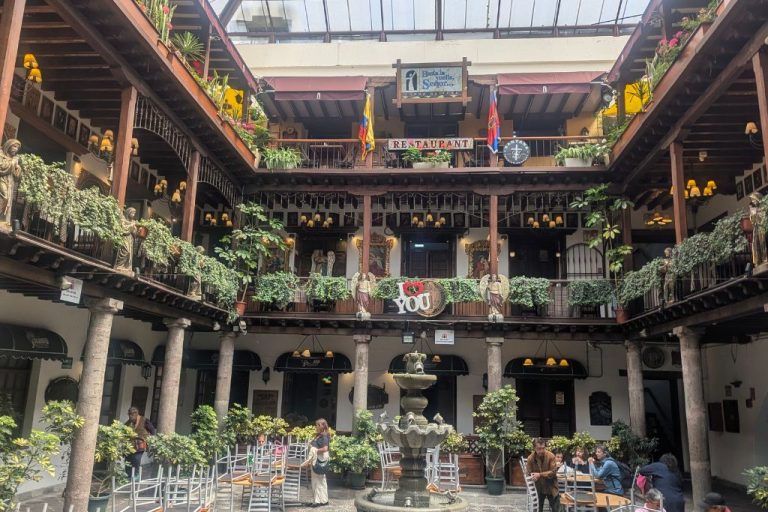
This is where Quito’s story lives. Colonial buildings, grand plazas and beautiful churches. Everywhere you walk, architecture tells a story.
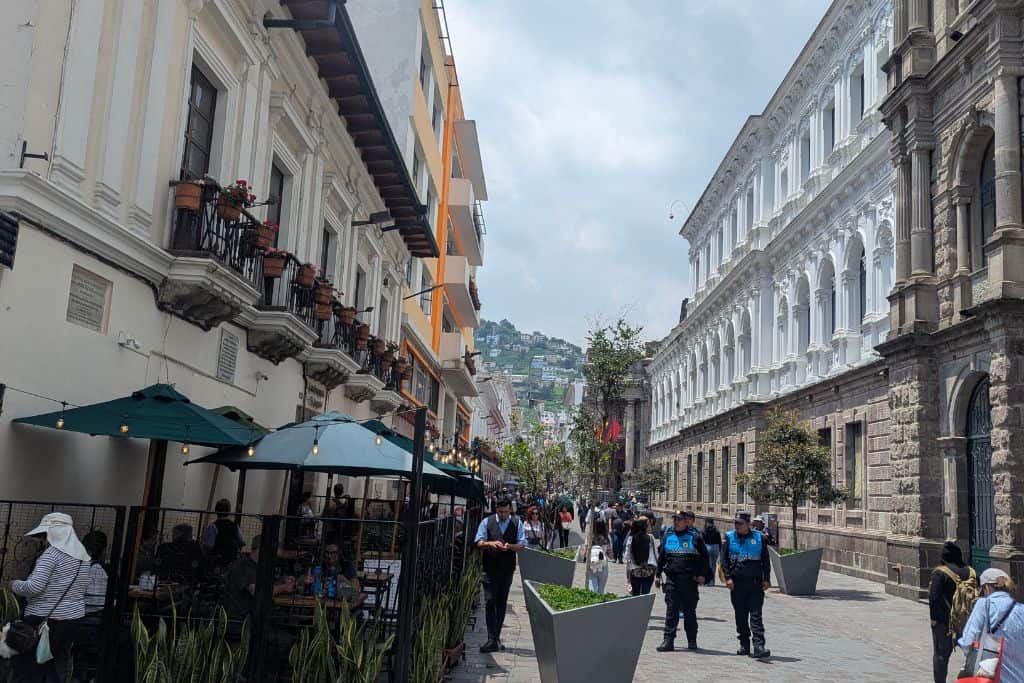
We chose to stay here, even after many people warned us not to. And honestly, it was one of the most meaningful ways to experience the city.
You would see a lot of local people living here. In the day time it felt safe to us. We would walk around to explore. But by early evening, most shops close, usually around 6:30 pm. Streets empty quickly, and the atmosphere becomes noticeably quieter. This is why locals often recommend returning before sunset, especially if you’re unfamiliar with the area.
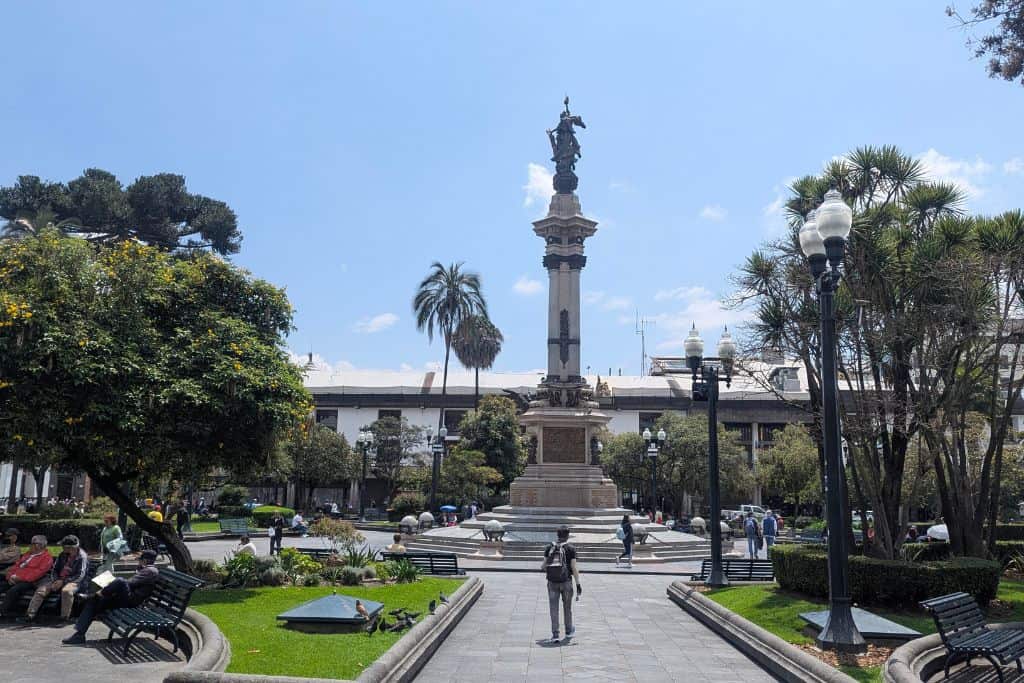
During the day, it feels vibrant and active. After dark, it feels still and subdued. You could feel the vibe switch after sunset. For our safety, we would make sure to be back home by 6:30 pm.
Staying here gave us a deeper understanding of the city, not just its beauty, but its realities too. You see economic contrasts, everyday life, and a side of Quito that feels authentic. If your goal is cultural immersion, this is the most powerful place to stay.
La Carolina: Modern, Polished, and Comfortably Familiar
If the historic centre represents Quito’s past, La Carolina represents its present and maybe even its future.
This area feels completely different. Wide avenues, modern high-rise buildings, business centers, shopping malls, and well-maintained infrastructure give it a more international feel. It made us think about Toronto!
And right at its heart is one of the most beautiful green spaces in Quito, La Carolina Park.
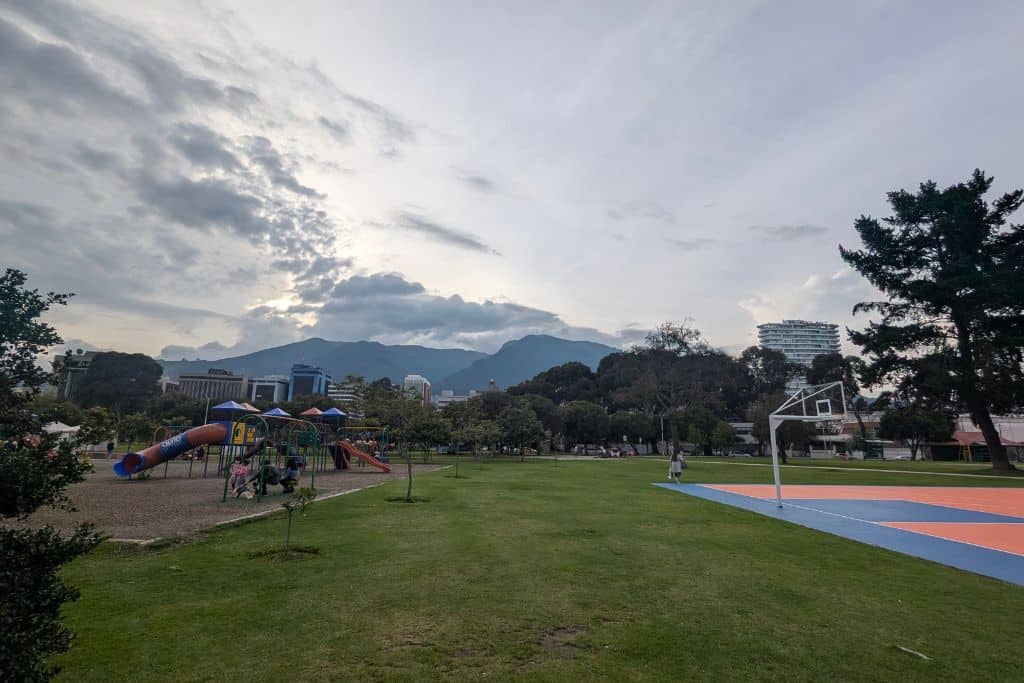
The park is huge, open, and lively. You’ll see people jogging, cycling, playing sports, walking dogs, or simply relaxing on the grass. It’s one of those places where you can sit for hours just observing everyday city life unfold.
The combination of green space and modern surroundings makes this area feel spacious and breathable. It’s also one of the reasons many locals and expats prefer to live here.
Another noticeable difference is the atmosphere after dark. Unlike the historic centre, La Carolina stays active into the evening. Restaurants remain open, people are out walking, and the streets feel more secure and lively. Many travelers consider it one of the safer areas of the city at night.
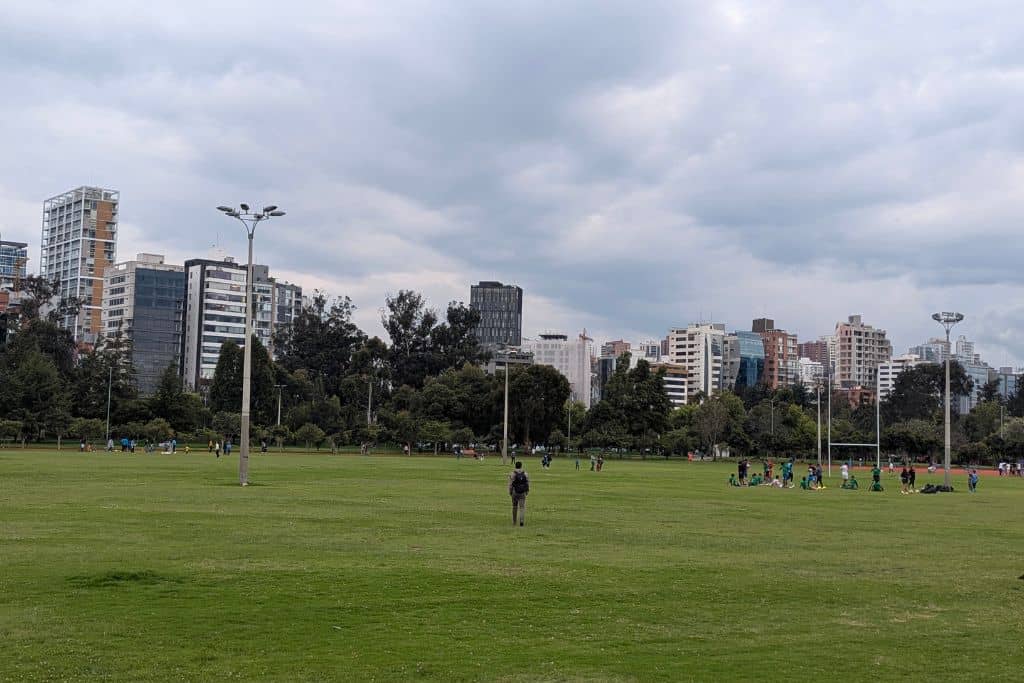
If you want comfort, convenience, and a modern urban lifestyle, this is likely where you’ll feel most at home. We would also have chosen to stay here if we were to stay for a month or longer.
La Floresta: Quito’s Creative and Bohemian Soul
La Floresta feels completely different from both the historic centre and La Carolina.
This neighborhood has a softer, more artistic energy. Streets are filled with murals and street art. Independent cafes sit next to small galleries and local boutiques.
It’s also one of the best areas in Quito for alternative food culture. You’ll find more vegan and vegetarian options here than in most other parts of the city, along with specialty coffee shops and small, locally run eateries.
Another beautiful aspect of La Floresta is its elevated viewpoints like Guápulo. Because Quito climbs up mountain slopes, certain streets open up to sweeping views of the valley and surrounding peaks.
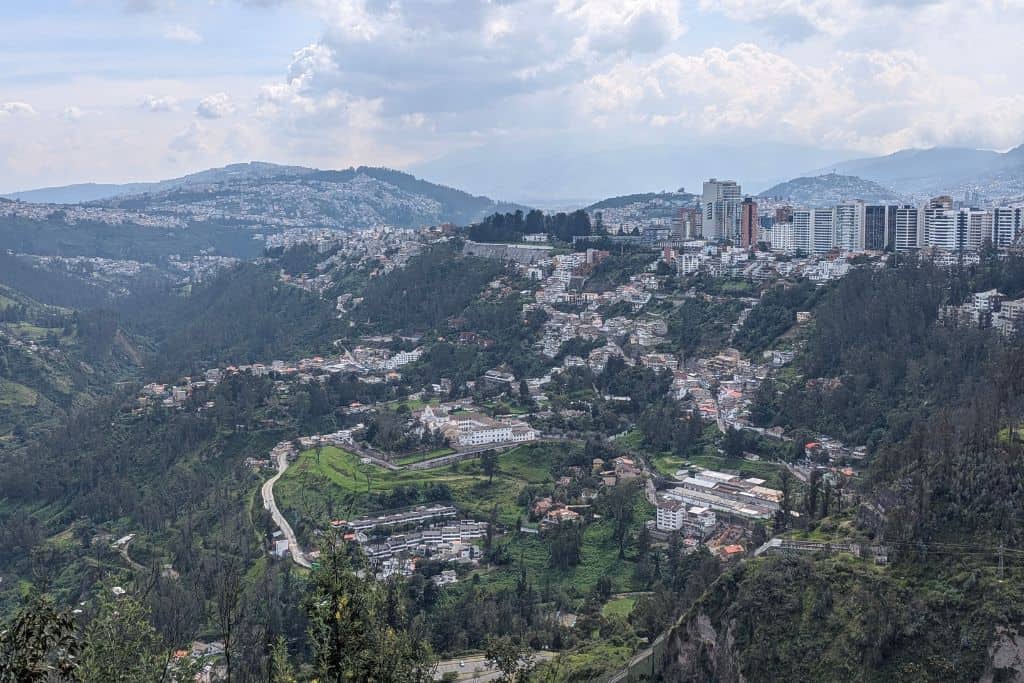
La Floresta attracts creatives, students, long-term travelers, and anyone looking for a more local, lived-in atmosphere.
Puertas del Sol & La Ofelia Area: Quiet, Residential, and Local
We also spent time staying near Puertas del Sol, close to La Ofelia Bus Terminal, and this part of the city felt completely different again.
This is not a tourist area and that’s exactly what defines it.
There isn’t much to “see” or “do” in the traditional travel sense. The neighborhood is primarily residential, with a very local atmosphere. Daily life happens here quietly and practically. You’ll find small neighborhood tiendas, bakeries, local eateries, and also larger supermarkets and stores that serve residents rather than visitors.
Because this area sits in the northern part of the city and climbs higher into the surrounding hills, the altitude can feel slightly more noticeable compared to lower central areas. But the elevation also brings a major advantage: views.
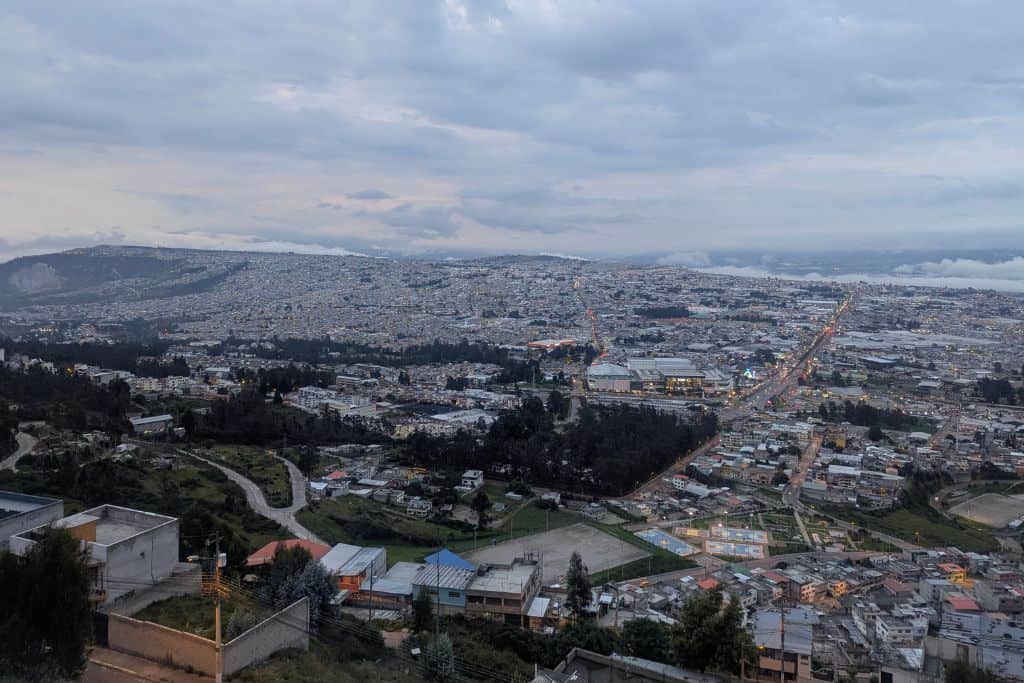
If your accommodation faces the right direction especially from higher floors or hillside positions you can get sweeping panoramic views across the entire valley of Quito. Seeing the city stretch endlessly between mountains is something special, particularly at sunrise or sunset.
From a practical perspective, this area can be very convenient depending on your travel plans.
- It’s closer to Quito’s airport than central districts
- It’s near the La Ofelia terminal if you’re heading toward cloud forest destinations like Mindo
- It’s relatively close to Mitad del Mundo, where you can stand on the equator
Because of this, it can be a strategic base if you’re only staying in Quito for a short time, you have an early flight, you plan day trips north of the city, or you want a quieter, more residential environment.
However, there are trade-offs.
It is quite far from the historic centre and main cultural attractions. And unlike many central areas, the metro does not extend all the way up here. That means you’ll usually need to rely on taxis or buses to move around, especially if you plan to explore different parts of the city.
So while Puertas del Sol and the La Ofelia area may not offer sightseeing or nightlife, they provide something else, a glimpse into everyday residential Quito, with space, views, and convenience for certain types of travel plans.
How to Get Around Quito Using Public Transportation
One of the things we appreciated most about Quito was how affordable and functional the public transportation system is.
There are three main options:
Troleybus
We arrived at Quitumbe bus terminal (the bus terminal in the south) and took the troleybus to our accommodation in historic centre. It operates like an electric streetcar system running through major corridors of the city.
You can buy tickets inside the terminal for about 35 cents per person.
Metro
The metro is modern and easy to use. Line 1 connects the south, centre, and north, making it very convenient for moving between major areas.
We used it often to travel between the historic centre and La Carolina. Tickets cost about 45 cents and can be purchased at the station.
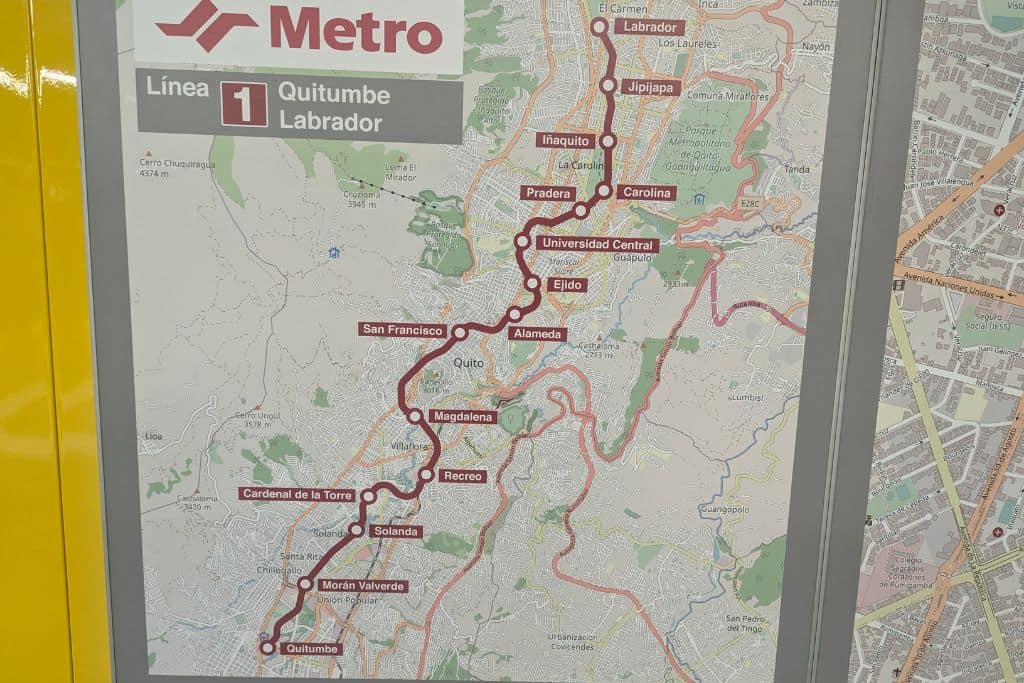
If you’re staying longer, you can get a transit card but for a short visit, buying individual tickets is easy.
Buses
The bus system is extensive but more complicated. Many buses don’t display route numbers clearly. Instead, they list neighborhoods.
If you’re staying long-term, you can learn the system. For short visits, it can be confusing. However, we did explore the buses as well.
Fare is about 35 cents and paid in cash to the driver.
Adjusting to Quito’s Altitude
Altitude affects everyone differently and Quito is high sitting at 2850 m or 9350 ft.
Even though we had spent nine months in Bolivia and Peru and lived in Cuenca for four months, the altitude still affected us when we arrived from the coast. It took about two days to feel fully normal again.
This is an important reminder: altitude adjustment is not permanent. Even if your body is adapted, moving between low and high elevation can still impact you.
Common symptoms of altitude adjustment can include mild headaches, fatigue, shortness of breath, and low energy even if you’ve experienced high elevations before. The best way to manage this is to take things slow during your first few days, stay well hydrated, avoid heavy physical activity at the beginning, and eat light, easy-to-digest meals. Most importantly, listen to your body and rest when needed. Altitude is usually manageable, but it should never be ignored.
FAQs About Visiting Quito
Is Quito worth visiting?
Yes! Especially if you enjoy culture, history, and exploring diverse neighborhoods. Quito has a lot to offer.
How many days do you need in Quito?
Keep at least 3–4 days to fully experience the city.
Is Quito safe for travelers?
Generally yes with precautions and awareness of location. Keep your belongings close to you. Do not trust strangers blindly. Don’t flash your valuables and you should be fine.
Is Quito safe at night?
Depends on the area. Some neighborhoods are safer than others.
Is the Historic Centre safe to stay in?
Yes with awareness, but it is best for daytime exploration.
What is Quito known for?
Historic centre, Andean mountains, colonial architecture. It’s also a major gateway to some of Ecuador’s most incredible nearby destinations. From here, you can easily visit traditional market towns like Otavalo, explore cloud forests and waterfalls in Mindo, relax in the hot springs of Baños, hike around the stunning turquoise crater lake at Quilotoa, or experience high-altitude landscapes and volcano views in Cotopaxi National Park.
How high is Quito?
About 2,850 meters (9,350 feet).
Do people speak English?
Some do, especially in tourist areas. But you would need some spanish to get around.
Where To Stay In Quito?
Based on what you want to experience, you can find a place in that neighborhood. As a lot of tourists prefer staying in La Carolina area, I am recommending two great places in that area.
Hotel Finlandia: In the heart of La Carolina, this hotel has great reviews, free buffet breakfast, free parking, high speed internet, and airport shuttle. It also allows a child to stay for free with a booking for two adults. The cost of this place is $100 per night.
La Carolina Suite Moderna: A more budget-friendly option for those who do not care for high end amenities. This place is a 9 min to La Carolina park, offers free wifi, free parking, and also has a restaurant in their premises.
This post includes affiliate links, which means that if you make a purchase or booking through them, we may receive a small commission. It doesn’t cost you anything extra, but it helps us keep the blog going. We only recommend products or services that we fully trust.
Read More About Ecuador