
Huayna Potosí 3-Day Climb Guide: How to Summit Bolivia’s Most Popular 6000m Peak
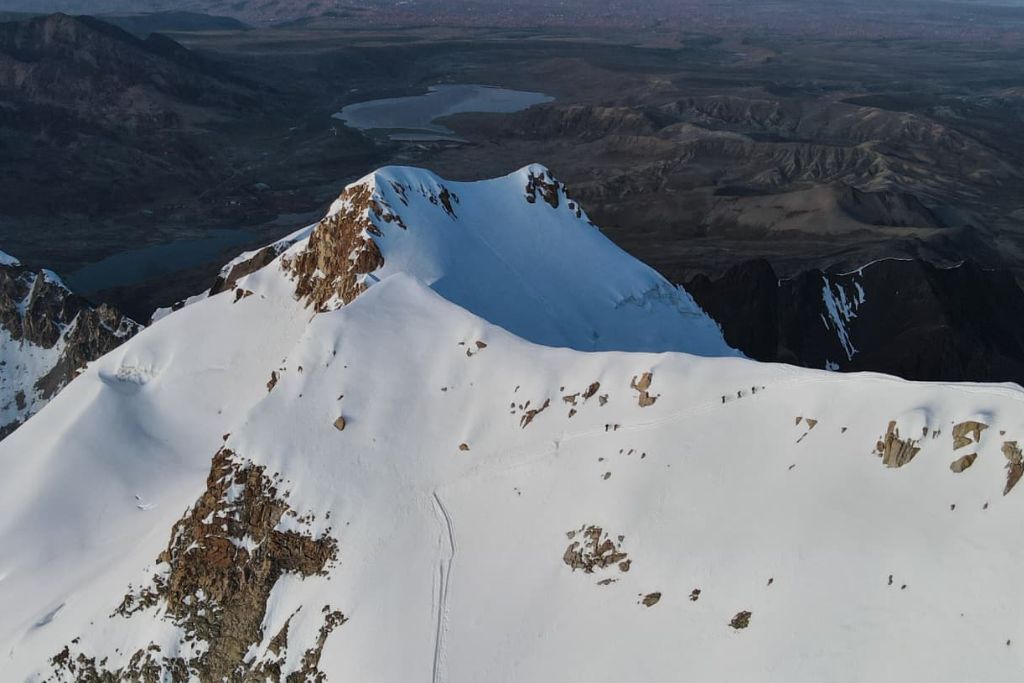
Climb on the final summit ridge of Huayna Potosí (6,088 m) in Bolivia’s Cordillera Real. Huayna Potosí is often called one of the most accessible 6,000 m peaks in the world. Standing about 25 km northeast of La Paz in the Cordillera Real range, it reaches a height of 6,088 m (19,974 ft). Despite its reputation as an “easy” 6000er, climbers should not be lulled into complacency; the altitude and conditions make it a serious undertaking.
Important Tip: Proper acclimatization is absolutely essential before attempting the climb. Many trekkers spend a few days in La Paz (3,600 m) and even do practice hikes (like nearby 5,300 m peaks) to prepare their lungs and legs for Huayna Potosí’s thin air.
Before climbing Huayna Potosí, I did the Pico Austria acclimatization hike, it was a great way to assess my fitness and adjust to the altitude. I’ve written about it separately for anyone considering it as a warm-up.
Logistically, Huayna Potosí is straightforward: no technical ice climbing is required via the normal route, and local guides provide all the climbing gear (boots, crampons, ice axe, ropes, etc.). The standard program is a 3-day, 2-night guided expedition from La Paz, featuring a training day on the glacier, a night at base camp (around 4,700 m), a trek to high camp (about 5,200 m) on day 2, and an alpine start for the summit push on day 3. Physically, expect steep trails and snow slopes that demand endurance – especially while carrying a 15–20 kg pack of winter gear up to high camp. The summit day is a pre-dawn marathon of roughly 6 hours ascending on snow and ice, followed by a careful descent.
In this blog, I’ll cover each day of the 3D/2N itinerary, then dive deeper into summit day specifics, compare the 2-day vs 3-day options, and finish with practical tips on preparation, gear, and acclimatization for a successful Huayna Potosí climb.
Day 1: Base Camp and Glacier Training
Morning – Transport from La Paz
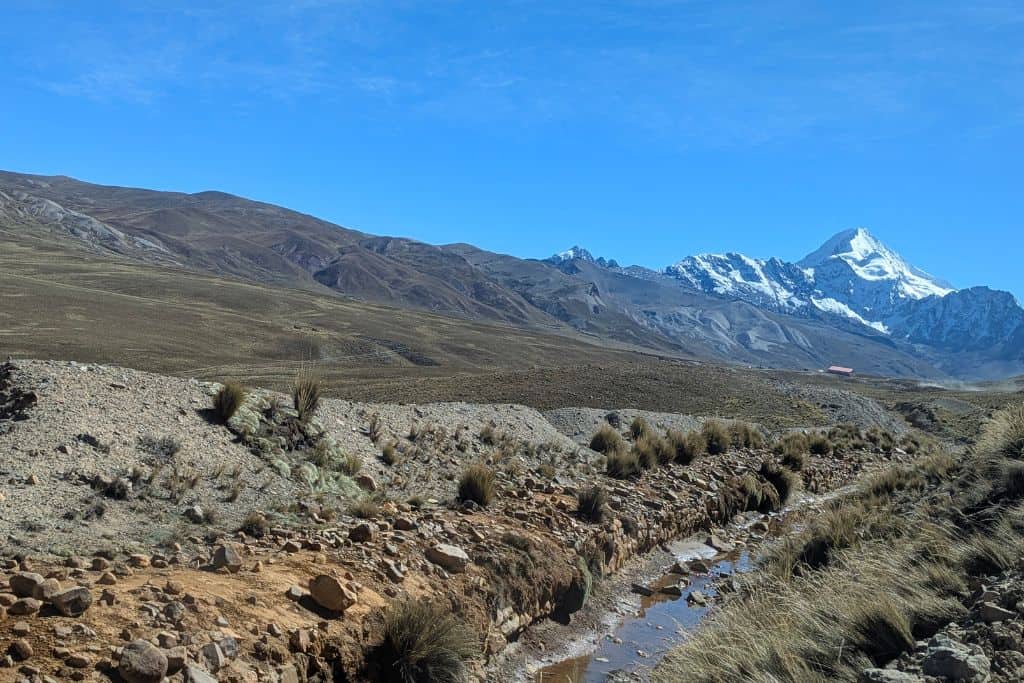
Day 1 begins in La Paz with an early pickup (around 9:00 am) for the drive to Paso Zongo, the trailhead area for Huayna Potosí. The drive takes approximately 1.5–2 hours, winding up mountain roads from 3,600 m to about 4,700 m. By late morning, you’ll arrive at the Huayna Potosí Base Camp (~4,700 m) and settle into the refuge hut.
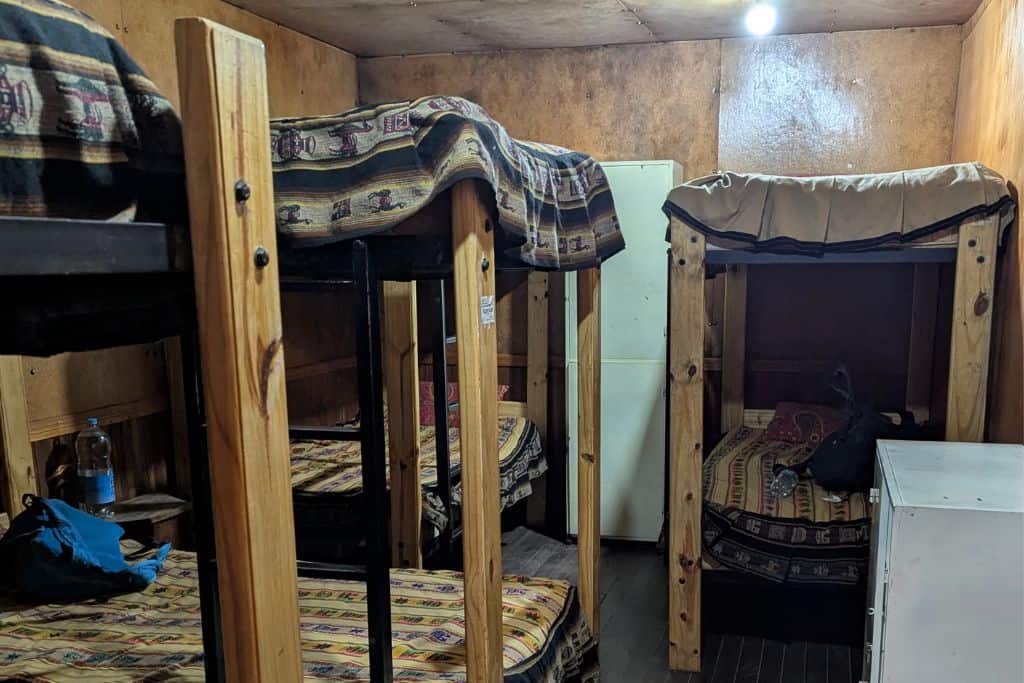
The base camp “refugio” is a simple mountain hut with dormitory-style bunks and basic facilities (no showers, but there are toilets). Guides typically serve a quick lunch upon arrival to fuel you for the training to come.
At this point you’ll also sort out and fit your climbing equipment – plastic double boots, crampons, helmet, harness, ice axe, etc. (all usually provided by the guiding agency). It’s important to ensure everything fits and functions properly before heading onto the glacier.
Afternoon – Glacier Skills Practice
After lunch, day 1’s focus is a glacier training session. A short hike (about 1 hour) from base camp leads to the foot of an old glacier (~4,800 m). Here, under the afternoon sun, your guides will run through the fundamentals of alpine travel. You’ll practice walking with crampons on ice, using an ice axe for balance and self-arrest, and moving while roped to a partner. Many tours also include the chance to climb a vertical ice wall (around 10–15 m high) on top-rope.
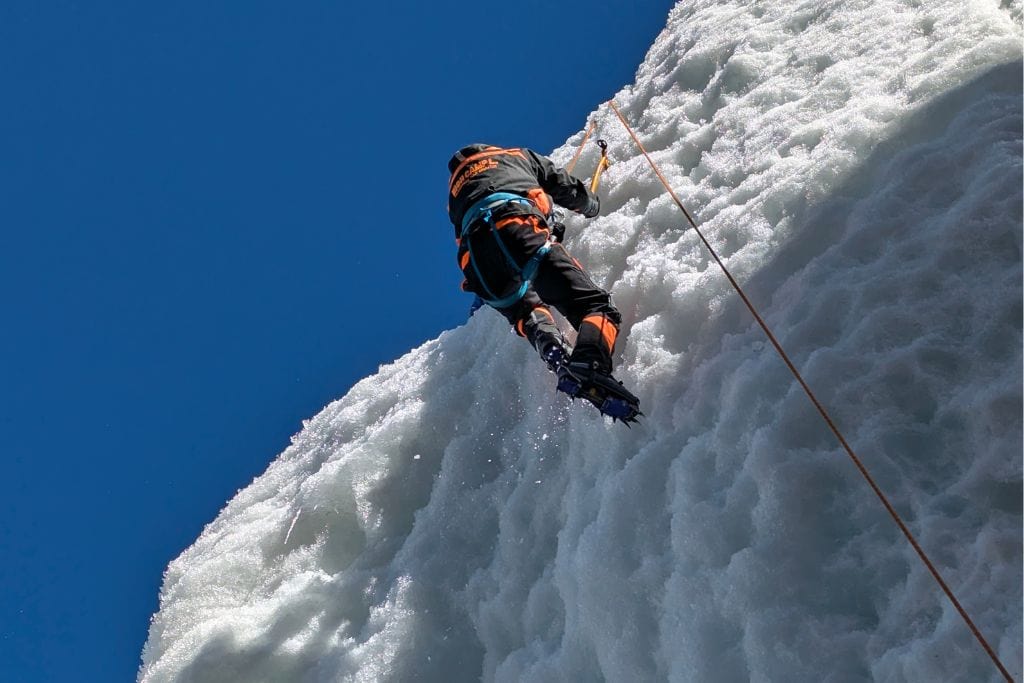
Glacier training on Day 1 – novice climbers practice ice climbing techniques on a serac near base camp. This training is invaluable, especially if you’re new to mountaineering – it builds your confidence in using the gear and gives a taste of the physical effort required. Expect to spend 2-3 hours on the ice practicing these techniques. By around 4–5 pm, you’ll hike back down to base camp for the evening.
Evening – Meals and Rest
Back at the base hut, the guides will cook dinner (typically a simple hot meal such as pasta or stew with tea). All meals are usually included in the expedition – you can count on lunch and dinner on day 1 being provided. Night falls early in the Bolivian Andes, and it gets cold fast at 4,700 m, so climbers often turn to bed early. Spend the evening organizing your pack for the next day’s ascent to high camp and try to get a good night’s sleep. (There’s no heating in the hut, so bundle up in a warm sleeping bag.)
Important Tip: Day 1 is relatively easy-going, but mild headaches or fatigue are common as your body adjusts to the altitude. Hydrate well and take it easy – the real climb begins tomorrow.
Day 2: Trek to High Camp (5,200 m)
Morning – Ascent from Base to High Camp
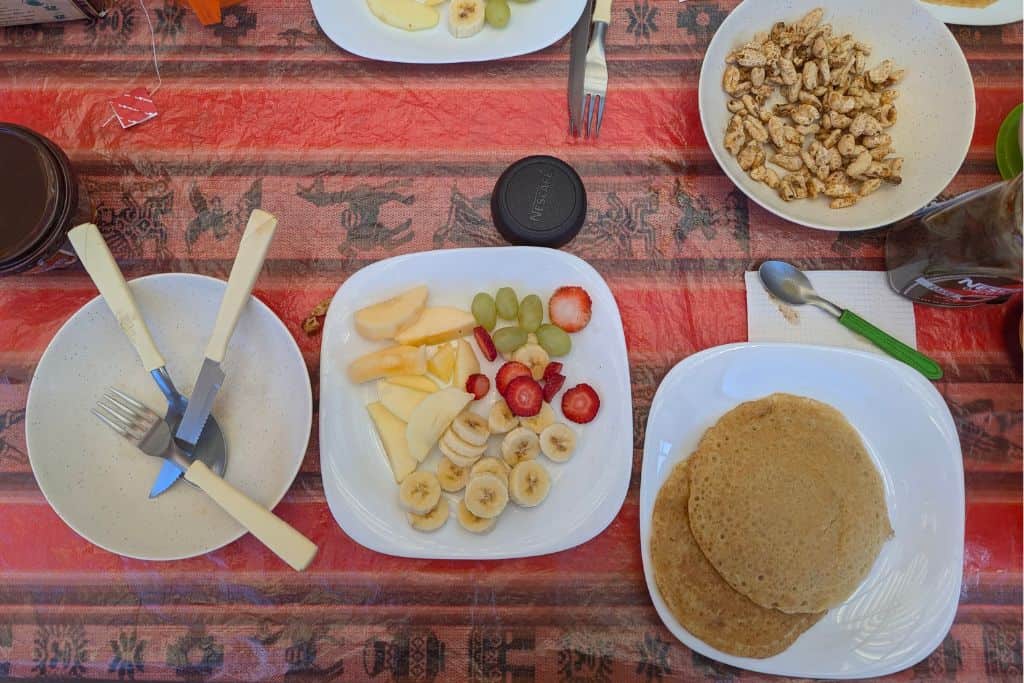
Day 2 starts with breakfast at base camp, after which you’ll load up all the gear needed for the summit attempt and hike to High Camp. The trek from base (4,700 m) to high camp (~5,200–5,250 m) gains roughly 500 m of elevation over a short distance, so although it’s not far, it’s a steep climb. The route follows a well-trodden rocky path with numerous switchbacks up the mountainside.
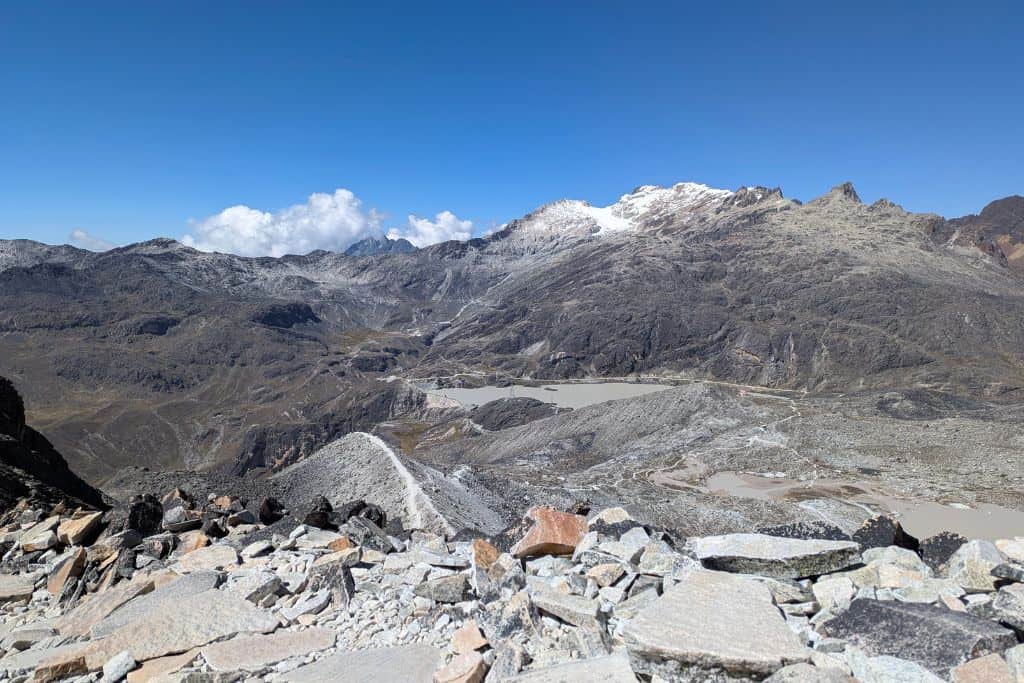
In dry conditions this is a straightforward hike on dirt and scree, but if there’s snow you may need to don crampons on some sections for traction. Climbers typically depart base camp by mid-morning and take 2 to 4 hours to reach high camp. With a heavy pack (filled with mountaineering boots, crampons, extra clothing, food, and water), it’s a slow, steady slog, remember to pace yourself and take short breaks as needed.
Many groups hire an extra porter for this segment (for a fee) to carry part of the load, which can save precious energy for summit day. If you carry your own pack, expect it to weigh around 15 kg and make the ascent feel quite strenuous.
High Camp Hut Setup
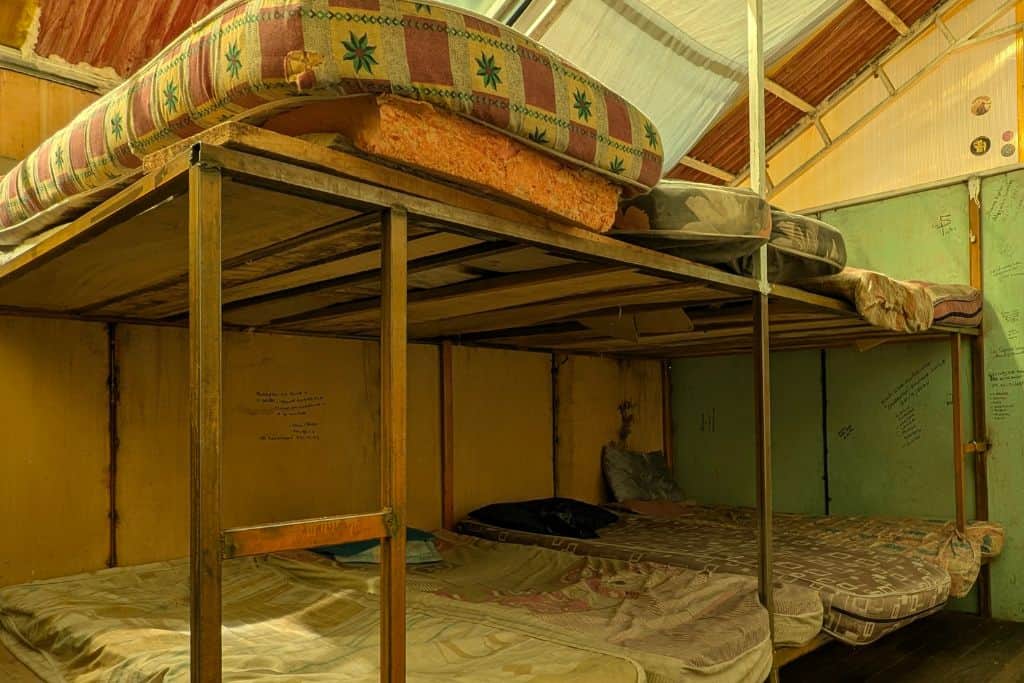
High Camp on Huayna Potosí is located at approximately 5,200–5,250 m on a rocky buttress right at the base of the glacier. There is a simple refuge here (often called Campo Alto), essentially a high-altitude shack with bunk beds for climbers.
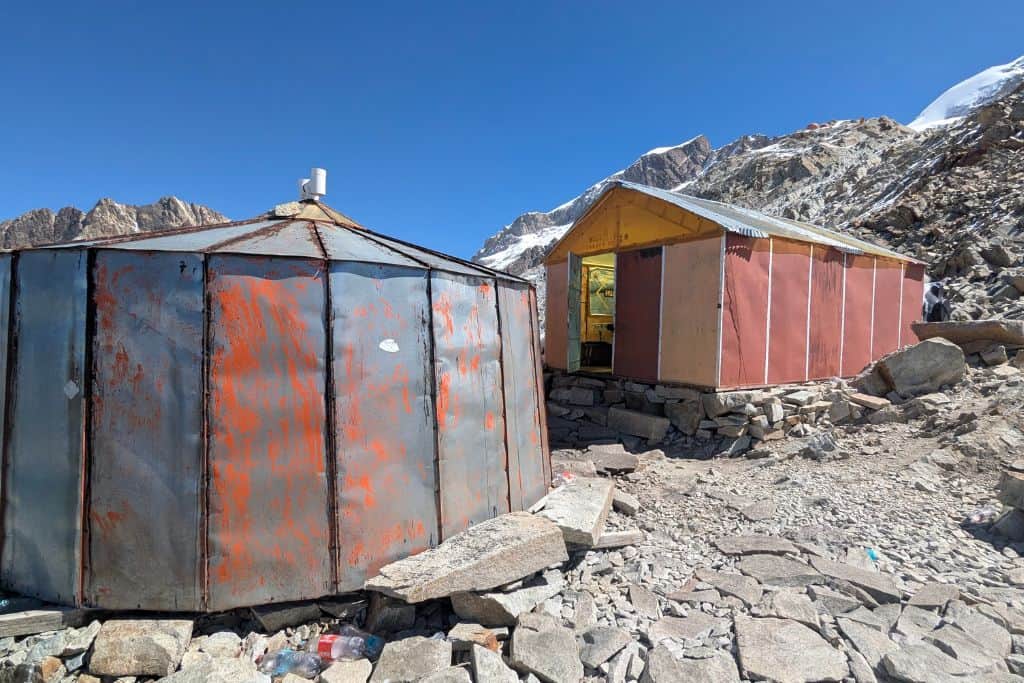
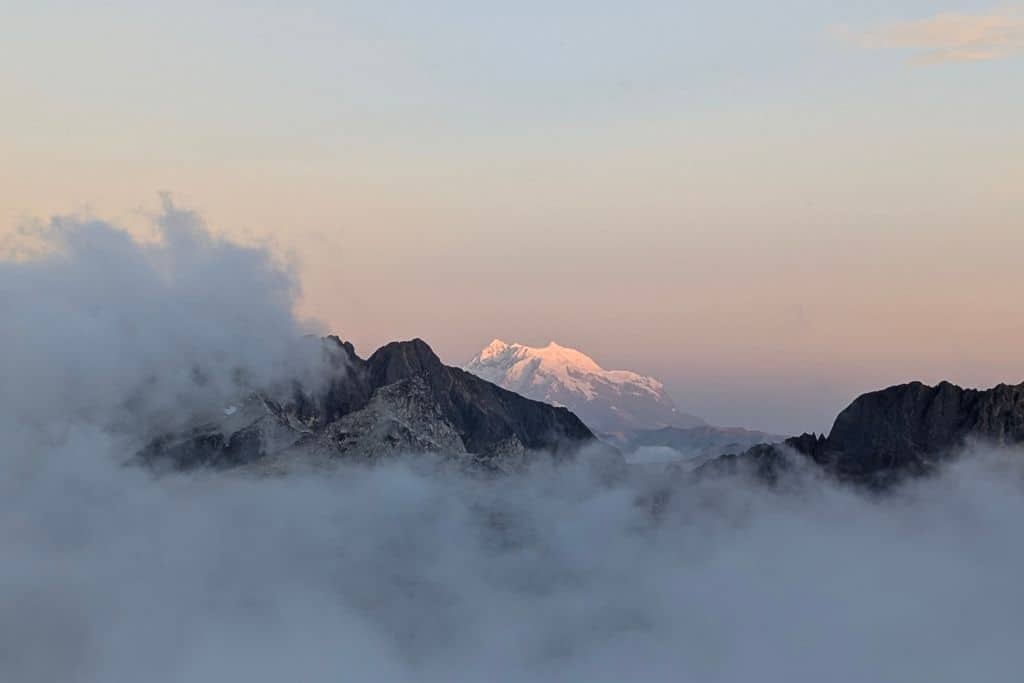
Simple bunkroom in a Huayna Potosí mountain refuge, climbers sleep in communal quarters at high camp. Space can be tight if multiple groups are sharing the hut. Upon arrival (likely early afternoon), you’ll claim a bunk, roll out your sleeping bag, and take a breather. From the high camp area you can actually see parts of the summit route above, and the views down the Zongo valley are spectacular on a clear day. Guides usually serve a hot lunch or snacks and plenty of coca tea or mate de coca (an herbal tea often used for altitude) once everyone is settled.
The rest of the afternoon is all about rest and preparation. At this extreme altitude, even simple tasks leave you winded, so it’s best to minimize exertion. You’ll spend time re-checking your gear: crampons adjusted, headlamp batteries fresh, and layers of clothing ready for a predawn start. If you have a headache or feel nauseous (signs of mild altitude sickness), inform your guides and stay hydrated – high camp is the last point to safely turn back if symptoms worsen.
Evening – Early to Bed
There isn’t much to do at high camp aside from resting. Dinner is usually served in the late afternoon or early evening (often something like soup and carbohydrates that are easy to digest). It’s crucial to eat and drink even if you don’t feel very hungry – your body will need the energy in the hours ahead.
After dinner, climbers prep their packs for summit day (water, snacks, extra gloves, camera, etc.) and then crawl into their sleeping bags as early as 6–7 pm. Getting quality sleep at 5,200 m is difficult – expect a restless night with shallow breathing – but even just lying down helps conserve energy.
The guides will brief everyone on the game plan for the summit push (typically starting around midnight or 1:00 am). With that in mind, set out your clothes and gear for a quick departure, then try to get some shut-eye time.
Day 3: Summit Push and Return to La Paz
Alpine Start – Departing High Camp
Summit day begins in the dead of night. Around 12:00–1:00 am, your team will gear up inside the freezing hut. You’ll put on your insulated climbing boots, multiple clothing layers, harness, helmet, and headlamp. Warm drinks (tea or coca tea) and a light “breakfast” are usually offered, though eating at this hour can be tough. Stepping outside into the darkness, you immediately feel the frigid mountain air – overnight temperatures often drop to –10 °C (14 °F) or lower, not counting wind chill.
Once on the glacier, the guides rope up each small team (usually one guide for two or three climbers, all attached to the same rope for safety). By about 1 am, you’ll begin trudging up the snow by the glow of headlamps.
The Ascent – Route and Key Sections
The climb from high camp to the 6,088 m summit typically takes 5–6 hours of steady uphill effort. The route is the “Normal Route,” which winds its way up Huayna Potosí’s glacier-covered slopes avoiding major crevasses.
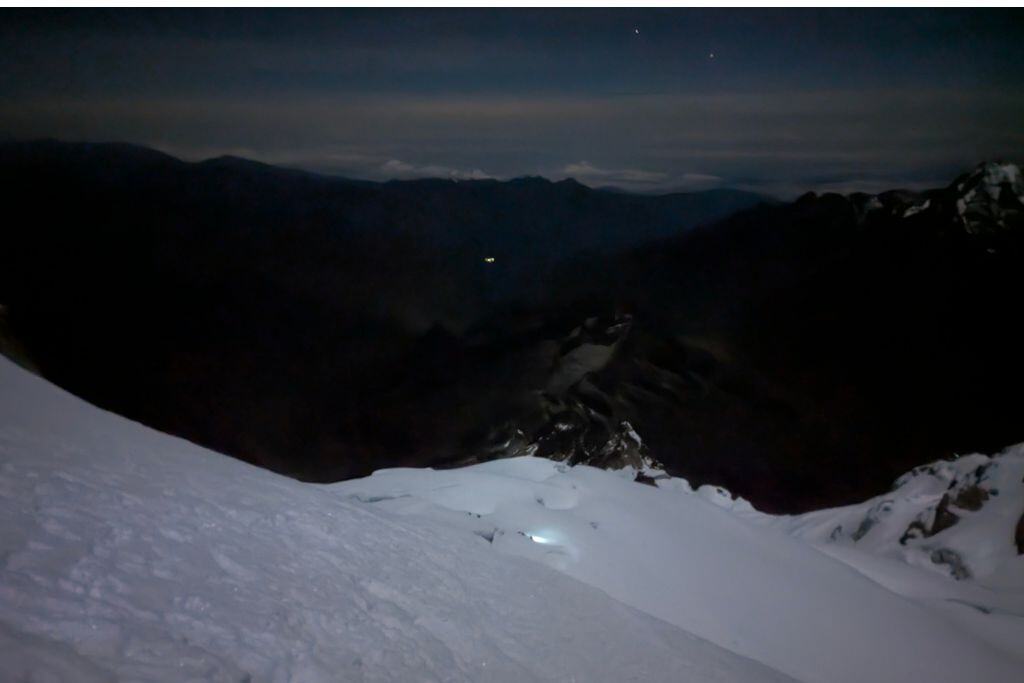
The grade is moderate at first, but after an hour or two you’ll encounter the first steep section known as the “Pala Chica” (Spanish for “small shovel” or small slope). Pala Chica is a 30-meter ice slope of about 50° incline – essentially a short, steep headwall of snow/ice that requires front-point crampon technique and a solid grip on your ice axe. Guides often shorten the rope distance between climbers here to maintain control. After surmounting Pala Chica, the route continues up a mix of more gentle snowfield and a few crevasse zig-zags.
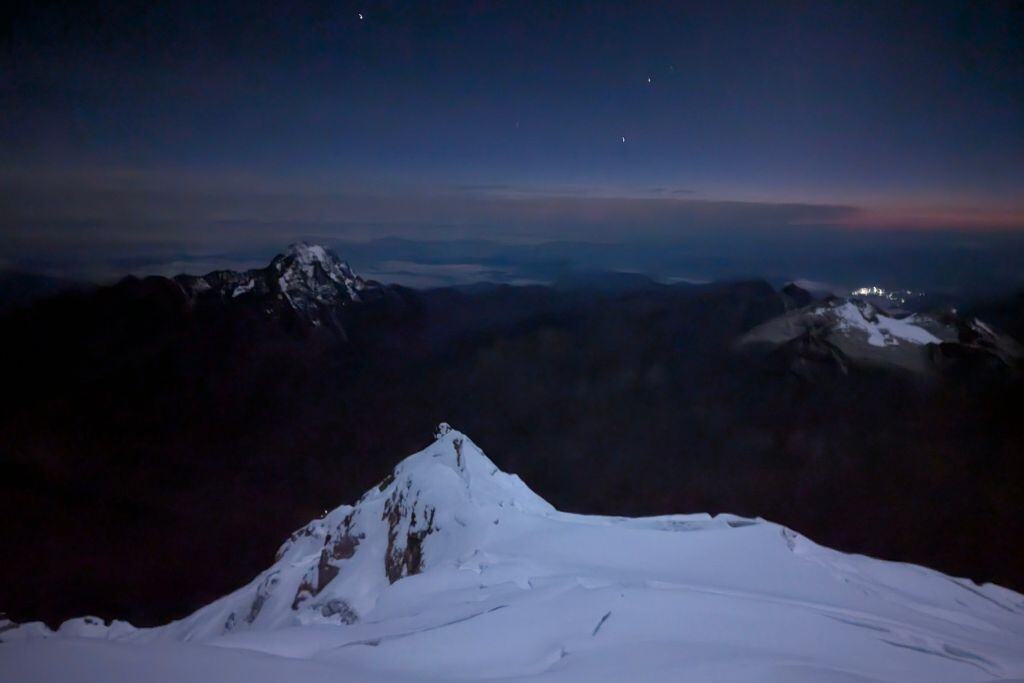
Several hours into the climb (usually around 5:00 am, still in darkness), you reach the base of the second crux: the “Pala Grande”, a larger steep face that guards the summit ridge. This section includes a near-vertical ice wall ~10 m high that you must climb with axe and crampons. Fixed lines may be in place, or your guide may belay you one by one up this short but challenging pitch. Above the ice wall, you’re around 6,000 m and can finally see the summit pyramid looming ahead in the dawn light.
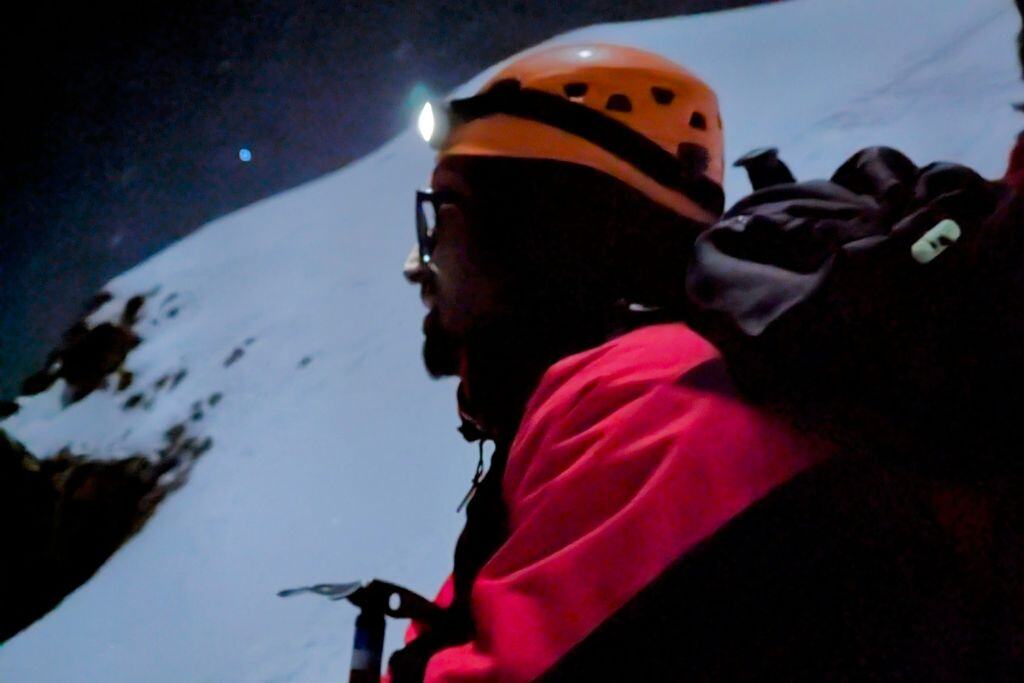
The last stretch is a spectacular (and nerve-wracking) summit ridge – a narrow snow crest with significant exposure on either side. In places the ridge is only about a meter wide, so full concentration and confident footwork are required. Fortunately, by this time morning twilight is breaking. The timing is designed so that you traverse the ridge right around sunrise.
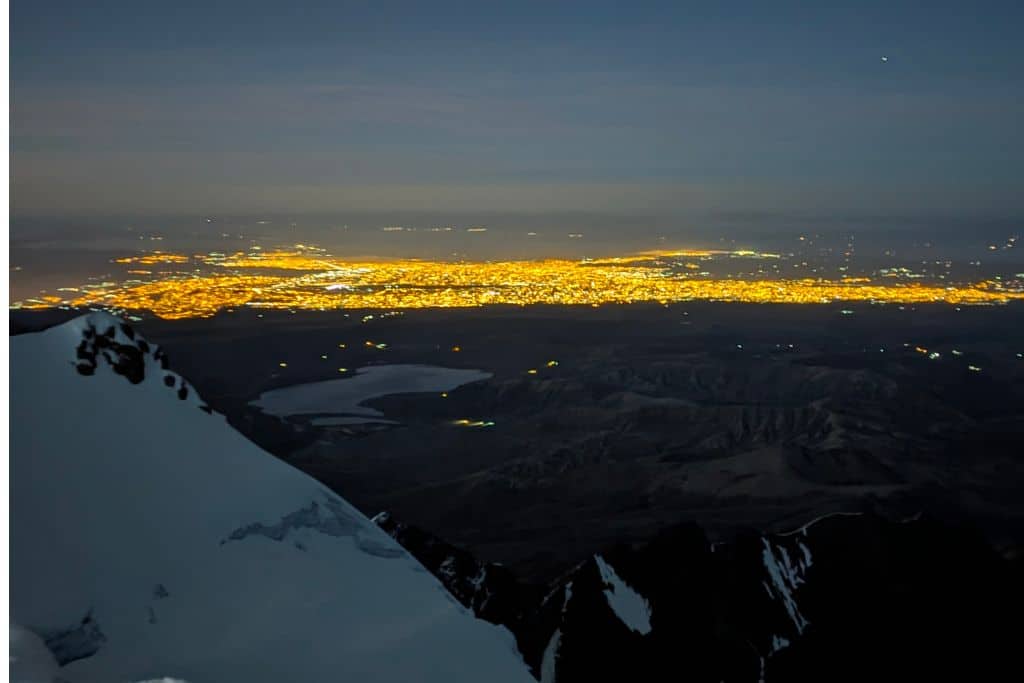
Typically, climbers aim to reach the summit by 6:00–7:00 am at the latest. Guides enforce a turnaround time (often ~7 AM) for safety – lingering too long means the sun warms the snow, increasing avalanche and crevasse danger on the way down. If a team is moving too slowly to make the summit by early morning, the guide will turn them around early for everyone’s safety.
Summit (6,088 m) – Triumph at Sunrise
After 6+ hours of ascent, you take the final steps up a short hump and suddenly there is no higher point – you’re standing on the summit of Huayna Potosí (6,088 m). If weather cooperates, dawn will be breaking or the sun just risen, bathing the surrounding peaks in alpenglow.
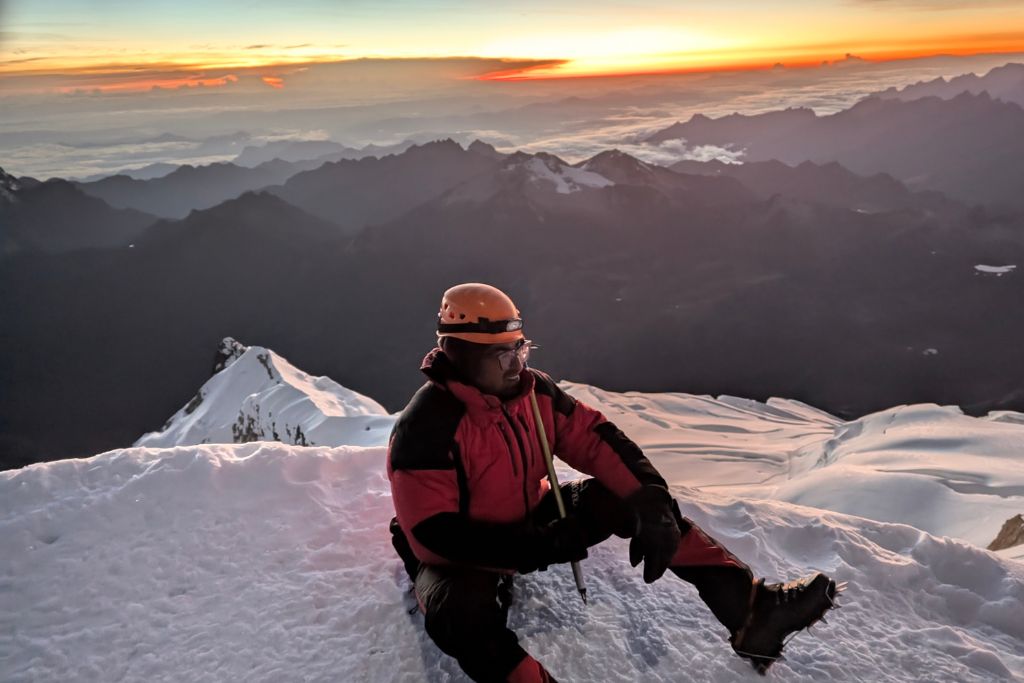
From the top, climbers are treated to panoramic views: the sprawling Altiplano and Lake Titicaca (3,810 m) to the west, the city of La Paz far to the south, and giants of the Cordillera Real all around – Illimani (6,438 m) and Illampu (6,368 m) are usually visible on the horizon.
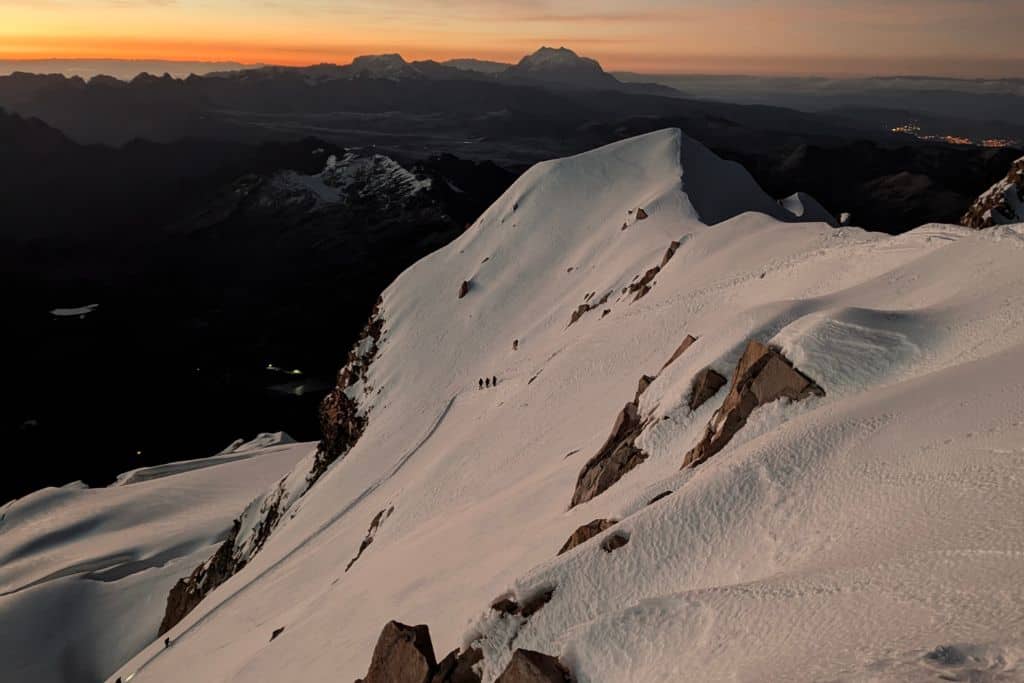
It’s an unforgettable sight and a hard-earned reward. Most teams spend only 10–15 minutes on the summit due to the extreme cold and altitude. You’ll take a few celebratory photos, enjoy the moment, and then prepare to head down. Remember, the climb is only half over – you still have to descend safely.
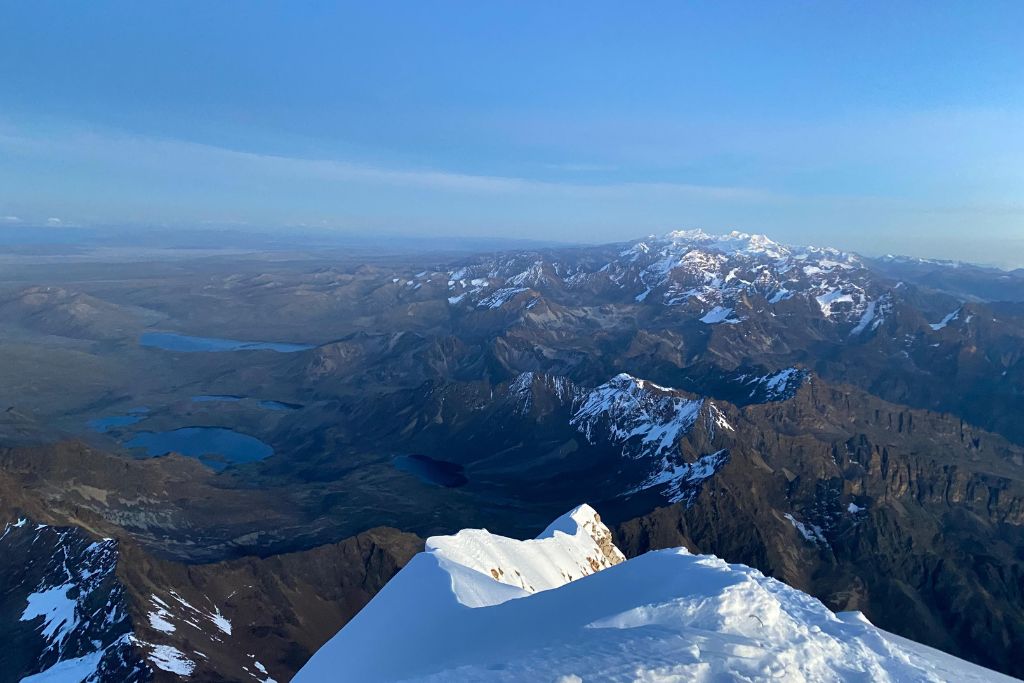
Descent – Back to High Camp and Base
The descent retraces the same route, which you now see in full daylight. Going down is significantly faster but can be almost as tiring, you need to remain focused, use your crampons carefully on the steep sections, and not let fatigue cause a slip. Some sections may be down-climbed facing into the slope or rappelled (your guide might set up a rope on the steep 10 m wall, for example).
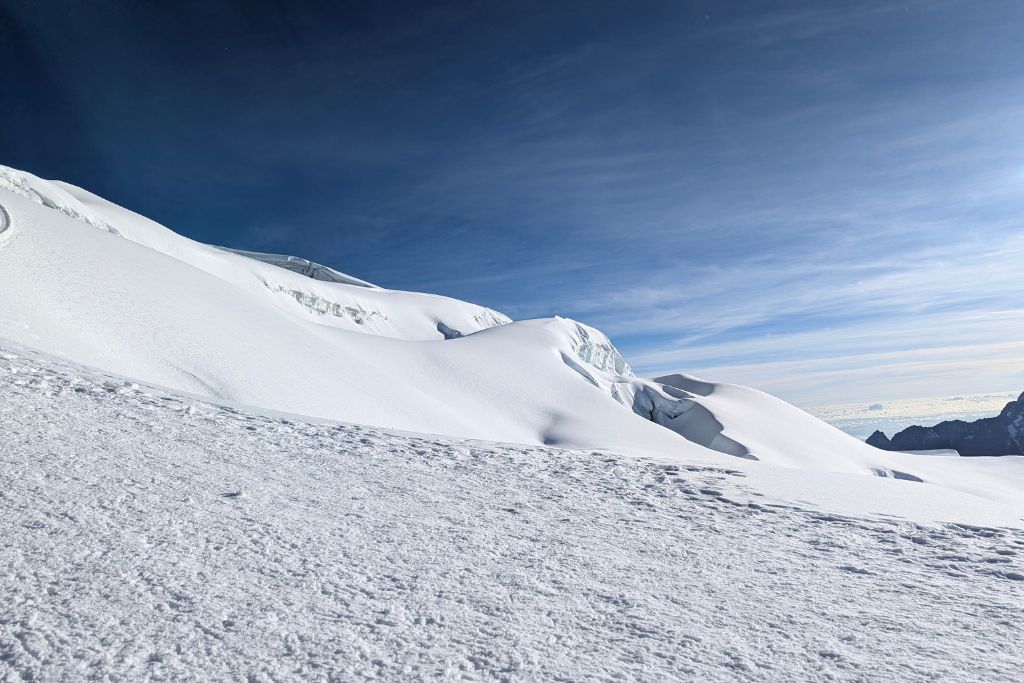
Within about 2-3 hours, you should be back at high camp (the descent from summit to high camp is often around one-third the ascent time). At high camp, you’ll have a chance to rest briefly and pack up any gear left there.
By mid-morning, everyone will hike down together from high camp to base camp – this takes roughly 1.5–2 hours. The return trail is the same rocky path, which by now feels much easier going downhill (and with lighter packs). Upon arriving at base camp late in the morning or early afternoon, you’ll be exhausted but exhilarated.
Usually, the group has a quick lunch or at least a tea break at base camp to celebrate. Finally, the transport vehicle will be waiting to drive everyone back to La Paz. The drive is about 1.5–2 hours, so climbers typically arrive back in the city by late afternoon or early evening (around 3–5 pm) – tired, a bit achey, but proud of having stood atop one of Bolivia’s highest peaks.
Summit Day Deep Dive: Terrain, Timing & Conditions
Summit day on Huayna Potosí is a long and challenging climb that tests both your physical stamina and your mental determination. Here’s a closer look at what to expect:
Overall Difficulty
Technically, Huayna Potosí’s normal route is graded as a PD (Peu Difficile) alpine climb – not very difficult – meaning it’s mostly non-vertical glacier travel. There are no sections that require advanced mountaineering techniques beyond basic crampon and ice axe use. However, “non-technical” doesn’t mean easy.
The combination of high altitude, steep snow (40–50° incline in sections), and cold, thin air makes this a strenuous ascent. Even experienced climbers often find themselves moving in slow motion due to the lack of oxygen.
Every step on summit day can feel like a big effort, especially above 5,800 m where the oxygen level is under half of sea level. Be prepared for your heart rate to be high and your breathing labored most of the way up.
Key Route Sections
The climb from High Camp (~5,200 m) begins with a steady ascent to Campo Argentino (~5,450 m), a flatter area reached in 2–3 hours, a good warm-up. Next is Pala Chica (~5,600 m), a short but steep section tackled in 15–30 minutes with front-pointing and axe work. Above that lies a gentler stretch, often a traverse, allowing a brief recovery.
After about 5 hours (roughly ⅔ of the climb), most teams reach the base of Pala Grande (~5,900 m), the crux – a steep headwall and ice bulge requiring fixed rope or belay over 10 meters of 45–50° snow/ice. Above it lies the summit ridge (~6,000 m), a narrow, exposed knife-edge leading 50–100 meters to the summit. Though not steep, the ridge demands caution, especially in wind, with drop-offs on both sides. If you reach this point by sunrise, the summit is typically just a few minutes away.
Exposure and Safety
Huayna Potosí’s main objective hazards come from glacier travel: crevasses, snow bridges, and cold. Guides lead safer paths, but roping up is essential in case of a fall. Small crevasses may require stepping over or detouring. Avalanche risk is low in the dry season (May–Sept), but sun-warming later in the day can destabilize snow – hence the strict summit turnaround (~7 am).
Frostbite is a real risk if you’re underdressed or inactive too long, and wind on the summit ridge can make temperatures feel dangerously cold. Helmets protect from falling ice, especially near Pala Chica and Pala Grande. Good guide services manage risks, carry radios, and may bring oxygen. Fatalities are rare but have occurred due to altitude or weather. Always respect the mountain and follow your guide.
Timeline and Pace
A typical summit day takes about 6 hours up: ~3 hours to Pala Chica, ~2 hours to Pala Grande, and ~1 hour for the final push along the summit ridge – usually reaching the top at dawn. Fast, well-acclimatized climbers may summit in 5 hours; slower groups may take 7+ hours and risk missing the safe window, often prompting guides to turn them around.
The descent takes ~2–3 hours to high camp, plus 1–2 hours to base camp after packing. In total, expect 9–12 hours of sustained effort, with over 900 m of vertical gain at high altitude, most climbers are thoroughly exhausted by day’s end.
Summit Conditions
At 6,088 m, Huayna Potosí’s summit is a small snow dome that fits just a few people. On clear dry-season mornings, expect dazzling views and intense sun-goggles or sunglasses are essential to prevent snow blindness.
Early morning temperatures hover around –5 to –10 °C (20s °F), but wind makes it feel colder. In the wet season (Nov–Mar), climbing is rare due to storms, wind, and deep snow. Time on the summit is brief, chilling sets in quickly, but don’t forget to pause and savor the moment: for many, this is a first 6,000 m peak and a true test of endurance.
Essential Gear for Huayna Potosí
Guided tours will provide the specialized climbing equipment (boots, crampons, ice axe, harness, helmet, ropes, etc.) as part of the package. They also typically lend you a heavy down jacket and waterproof pants if needed. However, you’ll need to bring your personal clothing and accessories. Plan to pack the following:
Clothing & Insulation
- Base layers (thermal top & bottom)
- Mid-layer: fleece or light puffy jacket
- Outer parka: warm down/synthetic jacket for summit night
- Waterproof shell: jacket & pants (windproof essential)
- Gloves: thin liner + thick insulated outer gloves or mittens (+ hand warmers)
- Headwear: warm beanie or balaclava for night; sun cap/buff for day
- Eyewear: Sunglasses or ski goggles (for sun & wind)
- Socks: 2–3 pairs of thick wool socks
- Trekking shoes/boots (for approach hike – comfortable & broken-in)
Gear & Equipment
- Backpack: ~50 L to carry layers, food, and shared gear
- Sleeping bag: rated to –10 °C (14 °F); can be rented in La Paz
- Sleeping bag liner (optional, for added warmth)
- Gaiters: often provided, to keep snow out of boots
- Headlamp: with fresh batteries
Hydration & Snacks
- Two 1 L bottles or a 2 L bottle (bladders freeze)
- Insulated bottle cover or carry inside jacket on summit day
- Snacks: energy bars, chocolate, nuts, or gels (easy to eat at altitude)
Toiletries & Miscellaneous
- Sunscreen (SPF 50+) and lip balm
- Toilet paper (huts aren’t stocked)
- Basic first aid kit: blister plasters, meds (Ibuprofen, Diamox, coca leaves if using)
- Personal toiletries
Important Tip: Lay out gear before departure and double-check everything, there are no shops at base camp. Pack smart and light, but never skip on warmth.
Complete Packing List: Check out our essential hiking gear list HERE!!
Acclimatization Strategy
Success on Huayna Potosí starts with proper acclimatization. Spend 2–3 nights in La Paz (3,600 m) or similar altitude before your climb. Stay hydrated, avoid alcohol and heavy exertion early on. Do acclimatization hikes like:
- Pico Austria (5,350 m) – moderate day hike in the Condoriri area
Pacing, Fueling & Summit Prep
Pace is key; start slow and steady from high camp. Resist the urge to rush early; guides will set a sustainable rhythm. Take brief breaks every 10–15 minutes, sip water, and nibble snacks, even if you’re not hungry. Stay warm during rests to avoid getting chilled.
Night-before checklist:
- Lay out clothing in order of use
- Keep headlamp, gloves, and snacks accessible
- Store camera/phone near your body to prevent freezing
- Confirm you’re feeling okay and talk to your guide if you’re not
- Safety always comes first, listen to your body and your guide
On the Summit & Descent
At 6,088 m, the summit may be cold and brief, but take a moment to savor the view. The real pride often comes on the way down as the effort sinks in.
Descent focus is critical, most accidents happen when climbers are tired and less alert. Save energy and concentration for Pala Grande and Pala Chica.
Back at high camp, celebrate with your group, you’ve earned it. In La Paz, rest, refuel, and recover. Whether it’s your first and only 6,000 m peak or the start of more climbs, you’ve accomplished something incredible!
Happy climbing!
This post includes affiliate links, which means that if you make a purchase or booking through them, we may receive a small commission. It doesn’t cost you anything extra, but it helps us keep the blog going. We truly appreciate your support!
Read More About Bolivia
READY TO TRAVEL LIKE A LOCAL?
Book a free 30-minute consulting call with us and let’s start planning your next unforgettable adventure!