
Perfect 3-Day Itinerary for Cuenca, Ecuador (2026 Guide)
After a year of slow travel across South America, starting in Argentina, then weaving through Chile, Bolivia, Peru, and now Ecuador, we finally decided it was time for a longer rest. A place where we could reset, find our routines again, and get through all the work we had been postponing.
And that place became Cuenca.
We planned to stay for a few weeks… and ended up calling it home for four months! (People did warn us that we will fall in love with Cuenca and they were right!). Cuenca has this rare balance of calm energy, walkability, culture, and mountain beauty. The kind of place where the days flow slowly, where you can work from a café overlooking a river, wander through cobblestone streets at dusk, and always end up discovering something new.
If you’re on my blog, you’re probably planning a trip to Cuenca. And trust me you’re going to love this city. There is so much to do here, but to make it easy, I’ve created the perfect 3-day Cuenca itinerary that blends history, culture, nature, local food, and beautiful viewpoints.
Keep reading!
About Cuenca, Ecuador
Cuenca’s actual name is Santa Ana de los Cuatro Ríos de Cuenca, named after the four rivers that run through the city. In short, Cuenca. It was founded in 1557 by the Spanish, though the area was home to the Cañari people long before that. Sitting at about 2,560 meters (8,400 ft) above sea level, Cuenca has that classic Andean highland feel with cool mornings, sunny afternoons, and evenings with a small showers. The weather changes here in minutes from sunny to a sudden passing shower. It’s a city with deep history, beautiful architecture, and an easy pace that makes it a favorite for both travelers and expats.
Plan Your Trip With My Favorite Resources
-> Best accommodation site: Booking.com
–> Book the tours here: Viator.com
–> Best car rentals: Discovercars.com
–> Get an eSIM to make sure you always have data: Airalo.com
The 3-Day Cuenca Itinerary
There is so much to do in Cuenca but I have put together the best places you can visit in 3 days to explore this beautiful city.
Day 1: Explore Cuenca’s Historic Center
Your first day is all about soaking in the historic center which is the heart of Cuenca. Cuenca is a UNESCO World Heritage Site filled with architecture, museums, flowers, rivers, and hidden courtyards that many visitors miss.
Stop 1: Parque Calderón + The Cathedrals
Start your morning at Parque Calderón, Cuenca’s main plaza and the symbolic center of the city. This square has stood here since the 16th century and is surrounded by towering palm trees planted during colonial times. It’s also where you get your first magical view of Cuenca’s most iconic landmark:
the blue domes of the New Cathedral (Catedral de la Inmaculada Concepción).
Those domes are even more breathtaking in person. Their color shifts with the light. Soft baby blue in the morning, deep navy at dusk, and glowing under warm spotlights at night.

Spend time wandering around the plaza, walk around and see vendors selling snacks, and feel the energetic vibe of this city. Across from the New Cathedral, you’ll find Cathedral Vieja (Old Cathedral) which is a much smaller, museum-like space that dates back to the 1500s. It’s one of the oldest structures in the city, and it’s worth a quick walk through to understand the religious history of colonial Cuenca.
Bonus Experience: The Courtyard View + Food & Drinks
As you walk along the side of the cathedral, look for a small alleyway that leads into a quiet courtyard. You can also access it via Calle Santa Ana (another alley that you will see), the entrance to the courtyard will be on your right.
This courtyard has one of my absolute favorite views of the blue domes. It’s peaceful, photogenic, and full of charm. And the best part?
There are cafés where you can grab a bite, order a drink, or treat yourself to an ice cream while soaking in the dome views.
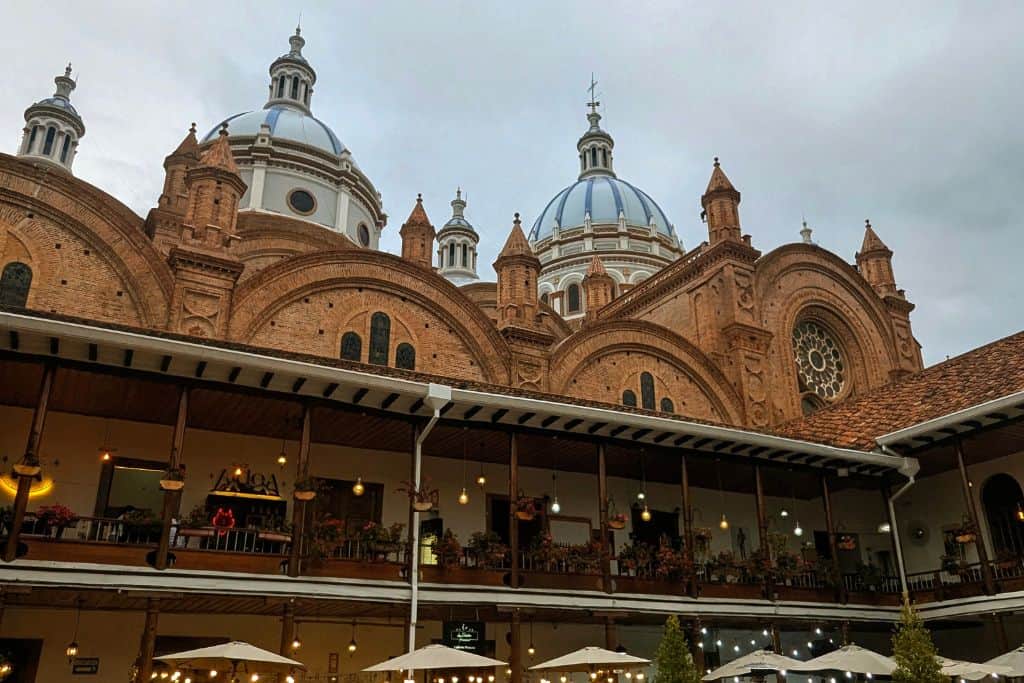
I’ve sat here many times with my coffee just watching the domes and the intricate architecture.
Don’t Miss: The Stunning 3-Storey Colonial-Style Mall
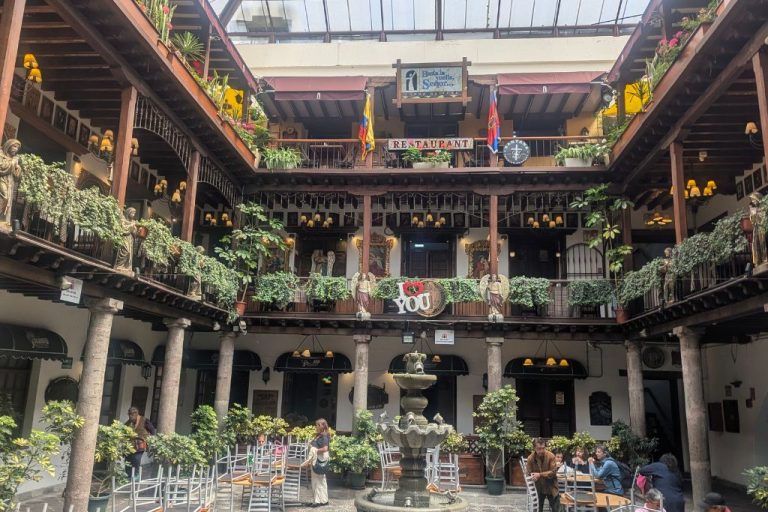
Right by this courtyard, you’ll also notice a gorgeous three-storey building with balconies, arches, and intricate colonial details. It looks like an old aristocratic mansion or a restored historical building… but surprise! It’s actually a mall.

Truly, I’ve never seen a mall this pretty. Even if you’re not planning to shop, take the time to step inside. The architecture alone is worth a visit.
Cathedral Rooftop
If you want a wider perspective of the city, climb the New Cathedral rooftop terrace for $2.50.
From here, you’ll see red terracotta rooftops and the surrounding Andes mountains stretching across the horizon. It’s one of the best ways to orient yourself on your first day.
Stop 2: Flower Market (Plazoleta del Carmen)
Just a few steps away is Cuenca’s famous Flower Market, often listed among the most beautiful flower markets in the world.
Ecuador is one of the world’s top flower producers, and you’ll see why: roses the size of your palm, lilies, orchids, and bouquets arranged with stunning artistry.
Even if you don’t buy anything, the colors and scents alone feel like a treat.
Stop 3: Calle Larga + Museums
Next, walk toward Calle Larga, one of Cuenca’s liveliest and most historic streets. In the daytime, it’s filled with murals, cafés, galleries, artisan shops, and preserved Republican-era architecture. At night, this is where locals and travelers come for drinks and music.
Along Calle Larga, you’ll find two great museum stops:
- Museo del Sombrero (Panama Hat Museum)
Ecuador, not Panama, is the real birthplace of the “Panama hat.” You can watch artisans weaving these toquilla straw hats by hand, explore the exhibits, and even try hats on. - Museo de las Culturas Aborígenes
A small private museum with hundreds of archaeological pieces representing Ecuador’s Indigenous cultures. A surprisingly rich collection.
As you stroll Calle Larga, you’ll see several staircases leading downward. Follow any of them and they will take you straight to the river (Río Tomebamba).
Stop 4: Breakfast or Lunch at Mercado 10 de Agosto
Just behind the hat museum, head into Mercado 10 de Agosto, one of Cuenca’s main local markets. Depending on when you eat or how hungry you are, Mercado 10 de Agosto can be your breakfast or lunch spot.
This place is an experience on its own with lots of fresh produce, food court, and you will find basically everything that you are looking for in terms of food. The second floor is the food court.
For breakfast, try the classics: humitas, tamales, tigrillo, pan de nata, or torta de choclo. You can get fresh fruit juice for $1.50 and most dishes like humitas and tamales cost $0.75.
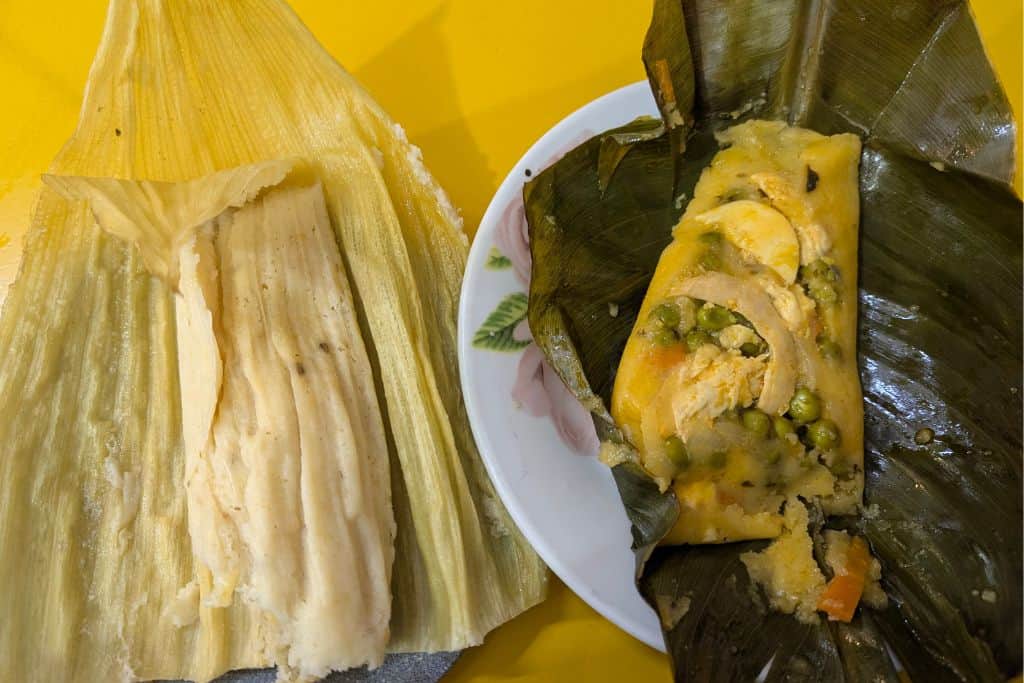
If you’re here for lunch, expect huge plates of pork, potatoes, salad, and rice for around $3–$5 (depending on plate size).
If you’re here on Tuesday or Friday:
You’ll see “La Limpia”, an Andean spiritual cleansing ritual using herbs, smoke, and energy balancing techniques. If you’re curious, ask for “una limpia”, it costs around $3 and is surprisingly refreshing.
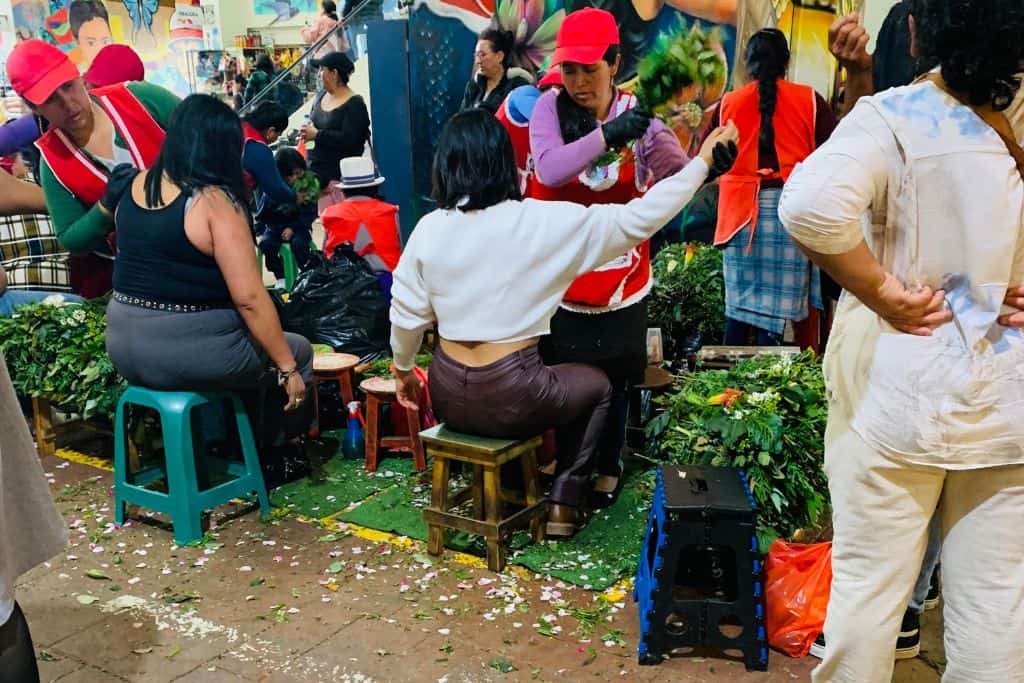
Take your time to explore the market. This is one of the best ways to observe daily life in Cuenca.
Stop 5: Riverside Walk (Río Tomebamba)
From Mercado 10 de Agosto, take the stairs (right around the corner) down to the river. If you can’t find the stairs, ask someone for “escalinatas”.
The Río Tomebamba is one of Cuenca’s defining features, flowing along the edge of the historic center, bordered by manicured lawns, old stone walls, and colonial houses hanging over the cliffs.

We lived close to the river for months, and every day we would check the flow and color of river. Over time, we noticed how rain in the mountains changes everything, color, speed, volume.
Walk along the river as long as you like. It’s peaceful, soothing, and incredibly scenic. What I absolutely love is the earthy scent and the sound of the river.
Stop 6: Parque de la Madre
As you continue, you’ll arrive at Parque de la Madre, a big, friendly city park with a running track, kids’ play area, grassy fields, and morning Zumba classes (free and full of energy!).
It’s a great spot to relax before ending your day.
READ MORE: How to Extend Your Tourist Visa in Ecuador: Step-by-Step Guide (2026)
Day 2: Culture, Markets & Viewpoints
Your second day is a mix of culture, art, and epic views, perfect for getting deeper into Cuenca’s identity.
Stop 1: Pumapungo Museum & Archaeological Park
Start your day at Pumapungo Museum, one of the most important cultural sites in Ecuador and part of the national museum network. The name “Pumapungo” means “Door of the Puma” in Kichwa.
Here you’ll find:
- Exhibits on Indigenous communities across Ecuador
- Stunning displays of traditional dress, art, and tools
- An entire floor dedicated to Afro-Ecuadorian history
- An onsite ethnobotanical garden
- Outdoor Inca and Cañari ruins
The ruins behind the museum were once part of a large administrative center during the Inca expansion. The terraces and stone structures still remain, and you can walk through them freely.
It’s a beautiful blend of history, nature, and culture.
Stop 2: Artisan Markets (Casa de la Mujer & CIDAP)
Continue your cultural day with a visit to Cuenca’s artisan markets.
- Casa de la Mujer: A multi-floor market filled with handmade jewelry, textiles, ceramics, bags, hats, and more. Prices are reasonable and you’re buying directly from the artisans.
- CIDAP (Inter-American Center of Popular Arts): Located near the Barranco (along the Río Tomebamba), this center showcases traditional crafts from all over Latin America. Sometimes, there’s also a small outdoor artisan market where you can buy hand-made products.

Both stops are perfect for supporting local vendors and taking home something meaningful.
Stop 3: Turi Viewpoint for Sunset
No Cuenca itinerary is complete without watching the sun set from Mirador de Turi.
To reach Mirador de Turi, take a taxi from the historic center for about $2–$3.
From the top, you get an incredible panoramic view of the city and the surrounding Andes mountains. The sky often turns shades of pink, orange, and purple, absolutely worth timing your visit for sunset.
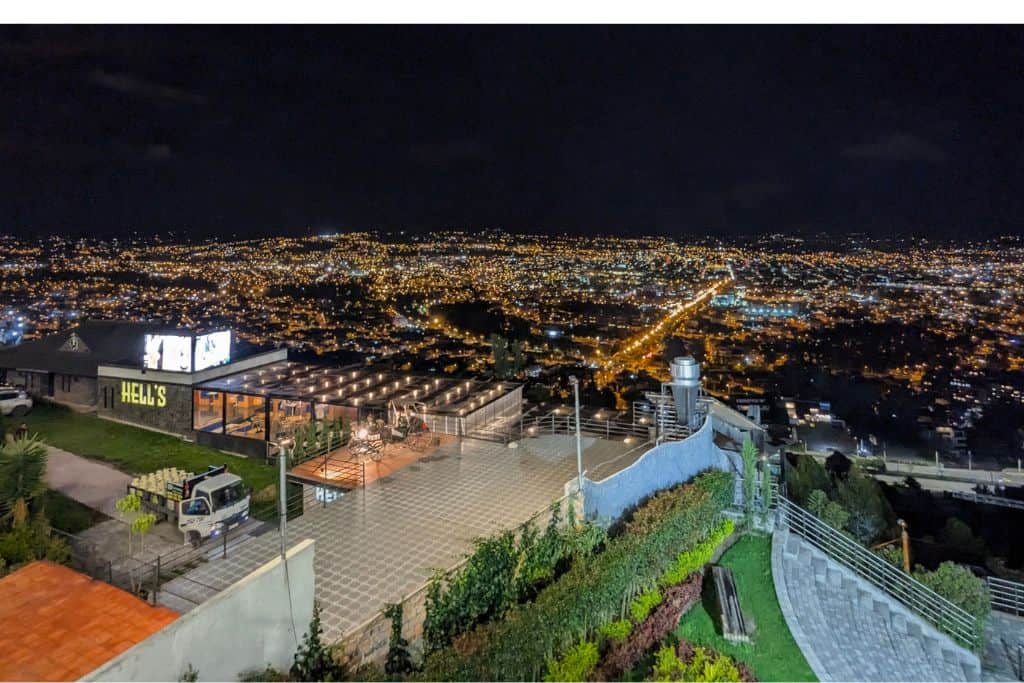
There are also artisan stalls and restaurants up there if you want to explore or grab a bite. Prices are slightly higher than in town, but the view makes it worth it. Or you can return to the city afterward for dinner.
RELATED: Best Hikes Around Cuenca, Ecuador
Day 3: Day Trip to Cajas National Park (or Amaru Wildlife Reserve)
Depending on the type of nature experience you’re looking for, you can choose between these two beautiful day trips.
Option 1: Explore Cajas National Park
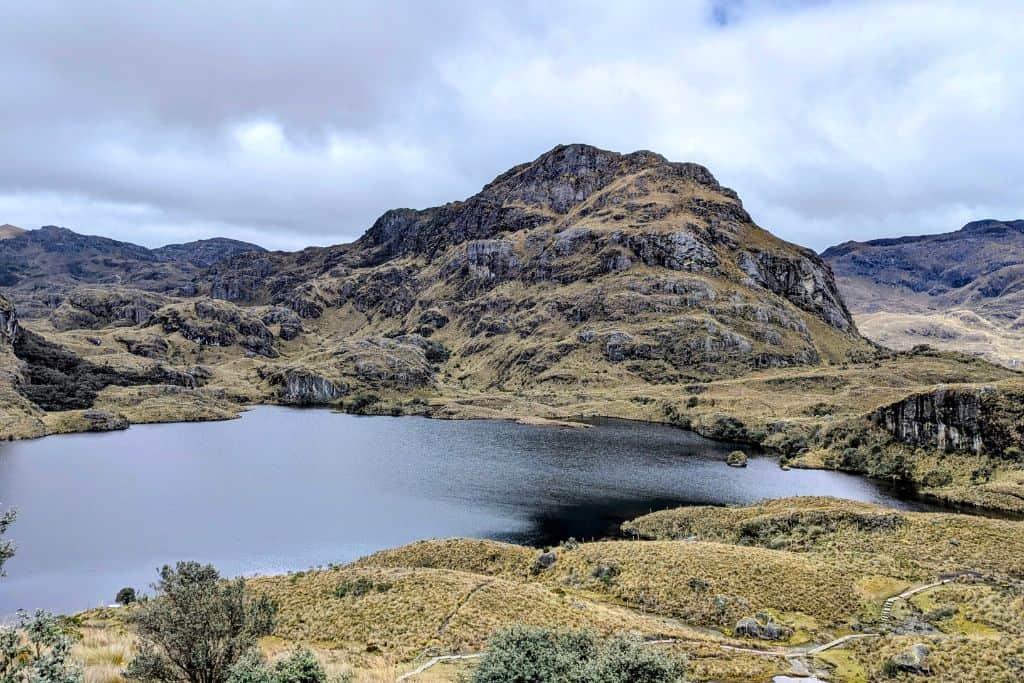
If you’re in Cuenca, a day trip to Cajas National Park is almost non-negotiable. It’s one of the most stunning landscapes in Ecuador. Big open valleys, many lakes, moody clouds, and scenery that makes you feel tiny in the best way.
Altitude & What to Expect
Cajas sits at 3,100–4,450m (10,000–14,600 ft), so the altitude is very real.
If you just arrived in Cuenca from sea level, give yourself 1–2 days to acclimatize before hiking here. Drink lots of water, go slow, and don’t underestimate how winded you might feel. It’s normal.
There are two main areas you’ll hear about: Lower Cajas and Upper Cajas.
Lower Cajas has more accessible trails and lush forests, and it sits at a lower altitude.
Upper Cajas, on the other hand, is higher up, with wide open landscapes, glacial lagoons, and colder, windier conditions. This is where you’ll find those dramatic landscape views.
How to Get There
You have a few options, depending on how comfortable you are with public transport or if you prefer something effortless:
By Bus
- Take a bus toward Guayaquil or Molleturo
- Tell the driver “Parque Cajas / Laguna Toreadora”
- Cost: usually around $3
- Ride duration: 30–40 minutes
- The bus drops you right at the park entrance (visitor centre)
Simple, cheap, and convenient.
Hire a Private Driver
If you want a more relaxed day or if you’re traveling in a group, hiring a driver is easy:
- Cost: $45-$55 roundtrip, depending on your negotiation
- Flexible timing
- No waiting around for buses
Join a Tour
If you prefer a structured experience, there are tours that include transportation, guide, and possibly lunch.
This is the easiest option if you’re not used to altitude hiking and prefer someone who knows the terrain.
Option 2: Visit Amaru Wildlife Reserve
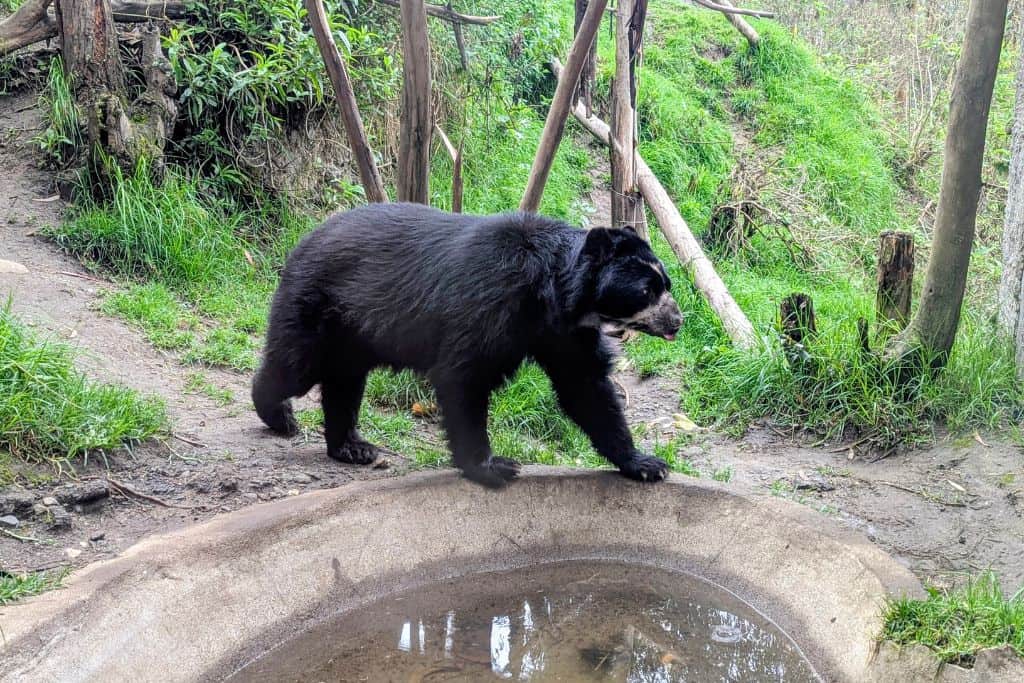
If you love animals, nature, and hiking, Amaru is a wonderful alternative for Day 3. It’s not a zoo but a wildlife rescue and rehabilitation center focused on conservation and education.
Getting There
- Take a taxi from city center: $4–6
- The taxi will drop you at the trailhead
- Entrance fee: $9 for adults
What to Expect
- A 4 km uphill hiking loop
- Every few minutes you’ll come across a different animal
- Animals are in large, natural-style habitats
- You’ll find informational signs documenting their stories
- Some spots have guides who share background on the species, their rescue, and their behavior
It’s immersive, emotional, and incredibly beautiful. Bring water, take your time, and plan for 3–4 hours to enjoy it without rushing.
Interested in taking a trip to Amaru Bioparque Zoo?
Read more about it: Amaru Bioparque Zoo in Cuenca: A Complete Visitor Guide
And that will be your wrap up for the 3-days in Cuenca! Of course, there is so much more to do but this should give you an understanding of the city.
Cuenca FAQs
Where to stay in Cuenca?
If you are spending a few days in Cuenca then your best option would be to stay in or close to El Centro. Thats the place where all the tourist attractions are. Close to El Centro is Calle Larga where all the party happens. We stayed in an AirBnB in a beautiful patrimonial building in El Centro which served our needs but here are the few other options for you:
Luxury: Santa Lucia House – Forum
This beautiful hotel is a historic home offering a comfortable room, free Wi-fi, free breakfast, massage services, airport shuttle. At a perfect location, this could be a great option!
Mid-range: Hotel Victoria
This beautiful hotel is situated in Calle Larga and offers cozy room with free Wi-fi, free breakfast, private balconies and amazing views! They also provide airport shuttle if you would like.
Budget: El Cafecito Hostel Cuenca
For my backpacker friends or solo travelers who are looking for budget-friendly hostels, this is a great choice. El Cafecito hostel has shared areas that has amazing views of the city! They also offer free Wi-Fi and private bathrooms!
Is Cuenca safe?
From our experience of staying in Cuenca for four months, it is absolutely safe! That said, you still have to be vigilant. We have found people to be very kind and respectful. We had no issues walking in the streets at night or had any incident where we felt unsafe. Take basic precautions, don’t flash your expensive things and you will be fine.
How many days do you need in Cuenca?
You can get a great feel for Cuenca in 3 days, which is why this itinerary works so well. It gives you time to explore the historic center, visit the museums, walk along the rivers, check out the markets, and take a nature day trip.
If you have more time, even better. Cuenca is one of those cities where you can slow down (like we did!), and you’ll never run out of cafés, viewpoints, and little neighborhoods to explore.
What is the best time of year to visit Cuenca?
Cuenca is pretty much a year-round destination, but the weather does change a bit depending on the season.
The driest months are usually from June to September, which means clearer days and great conditions for Cajas National Park. The rest of the year you can expect a mix of sun, clouds, and short bursts of rain. Even on rainy days, Cuenca is still very walkable, so just bring a light rain jacket and you’ll be fine.
Can you drink the tap water in Cuenca?
A lot of people ask this question. Now remember, the answer is not the same for all the cities in Ecuador. This answer is specific to Cuenca. Yes! Cuenca is known for having the purest tap water in all of Latin America. The water comes straight from the Cajas mountains, passes through protected ecosystems, and then goes through a strict treatment process before reaching the city. Because of this, locals proudly drink tap water (Agua de Cuenca) every day, and most travelers do too without any issues. We have been drinking since four months and have found it to be the most delicious tap water!
Final Thoughts On Visiting Cuenca
Cuenca ended up being one of those places that surprised us in the best way. We came here planning to slow down for a bit, and the city made that incredibly easy. With the river walks, friendly people, busy markets, and this steady energy that runs through everyday life, it didn’t take long for Cuenca to feel comfortable and a lot like home.
People kept telling us, “Be careful, Cuenca has a way of making you stay longer than you planned.” And honestly, I get it now. There’s a charisma to this city that’s hard to explain. You only really understand it once you’re here.
This post includes affiliate links, which means that if you make a purchase or booking through them, we may receive a small commission. It doesn’t cost you anything extra, but it helps us keep the blog going. We only recommend products or services that we fully trust.
Read More About Ecuador

READY TO TRAVEL LIKE A LOCAL?
Book a FREE 30-minute consulting call with us to plan your adventures!